Twelve Feet Above the Seattle Underground
Ama arrived the following week, introduced by a mutual friend as “someone who knows how to talk to historical societies without making them nervous.” She was Ghanaian by way of London, worked in museum education, and had opinions about everything from lighting design to font choice on interpretive plaques.
“You can’t just tell people it’s interesting,” Ama said, standing in the middle of what used to be a bank lobby. “You have to make them feel what it means that this room existed at street level.”
“How?” Maya asked.
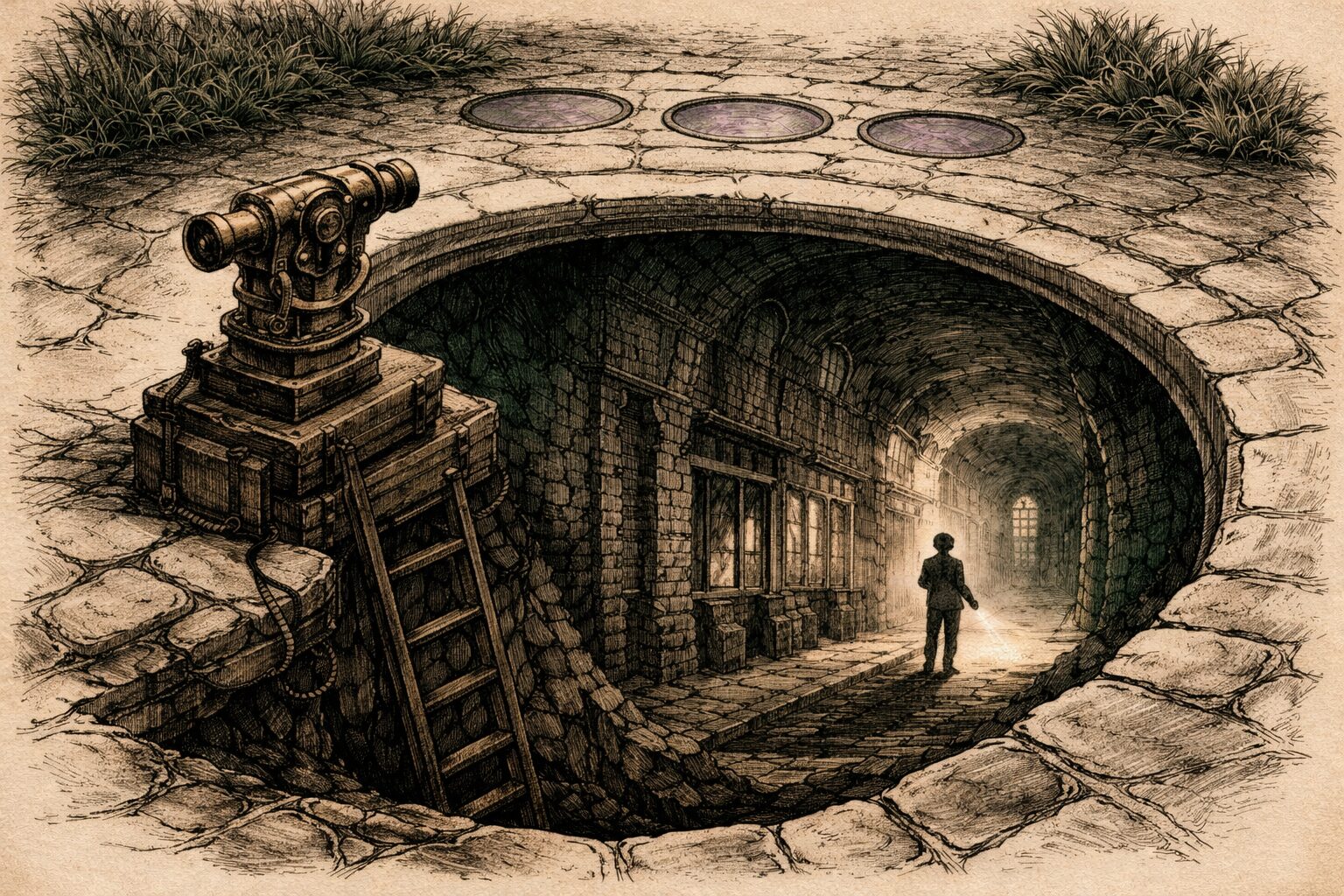
“Context. Sensory anchors. The weight of twelve feet of history pressing down on the ceiling.” Ama looked up at the brick arches that supported the modern sidewalk. “When I was a kid in Accra, my grandmother lived in a house that had been partially buried by erosion. The front door was normal but the back door was four feet above ground. You had to climb down a ladder to get to the garden. It was disorienting. I never forgot it.”
She walked to the window openings—long since bricked over—and ran her hand along the sill. “People need a physical contradiction. Something that shouldn’t be but is.”
Tomasz pulled out his headlamp. “Like this.” He clicked it on and aimed the beam at the ceiling, where the bottom of a vault light was visible, its purple glass intact but caked with decades of dirt. “Sidewalk above, light below. The sandwich structure.”
Ama turned to Maya. “Can you get that glass cleaned?”
“Probably not. The sidewalk’s been repaved twice since the original installation. The lights are embedded in concrete now.”
“Then you make it part of the story. The thing that used to let light in is now just a stain on the ceiling. That’s loss. That’s what you’re showing people.”
Maya felt something shift in her understanding of the project. She’d been thinking of the tour as a historical walk-through, a chance to see preserved architecture. But Ama was describing it as a confrontation with change itself—the way a city could rewrite its own elevation and ask everyone to pretend the old ground floor had never been.
When Someone Says It’s Just a Basement
The first practice tour included six people: Tomasz, Ama, two graduate students from the University of Washington’s urban planning program, and a couple from Sydney who’d heard about the project through a heritage architecture blog. Maya started them at Pioneer Square, where the original street level was still visible in some of the building foundations.
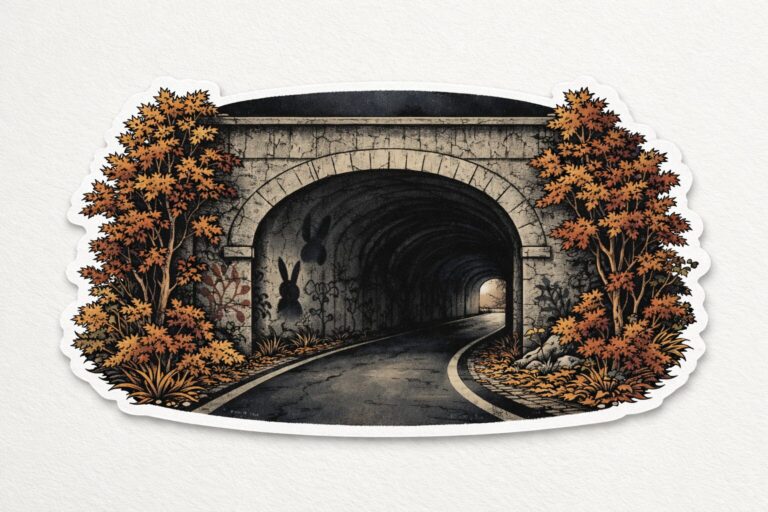
“Most people think the seattle underground is a secret tunnel system,” Maya said, standing on the modern sidewalk. “But it’s not hidden. You’re standing on top of it right now.”
One of the grad students—a woman named Hannah with a nose ring and a weatherproof notebook—pointed at a basement window in the building beside them. “So that’s an underground window?”
“That’s a ground-floor window from 1889.”
The Australian man—he’d introduced himself as Cooper—crouched down to peer through the dirty glass. “But you can see shops down there now. They’re still using it.”
“Some sections, yes. The city rents out parts of the underground for storage and utility access. But most of it’s been sealed since the early 1900s.” Maya led them to the entrance of the tour space, a nondescript door between a tourist trap selling Space Needle keychains and a Thai restaurant that always smelled faintly of burnt basil.
The door opened onto a wooden staircase that descended into a coolness that had nothing to do with temperature. It was the coolness of absence—light, sound, the sense of being connected to the surface. Maya counted the steps out loud. Fifteen. The same number that separated the modern sidewalk from the 1889 street level.
At the bottom, Tomasz immediately turned on his headlamp, and the beam caught the purple vault lights in the ceiling. They glowed like deep-sea creatures, the trapped dirt inside the glass creating layers of color.
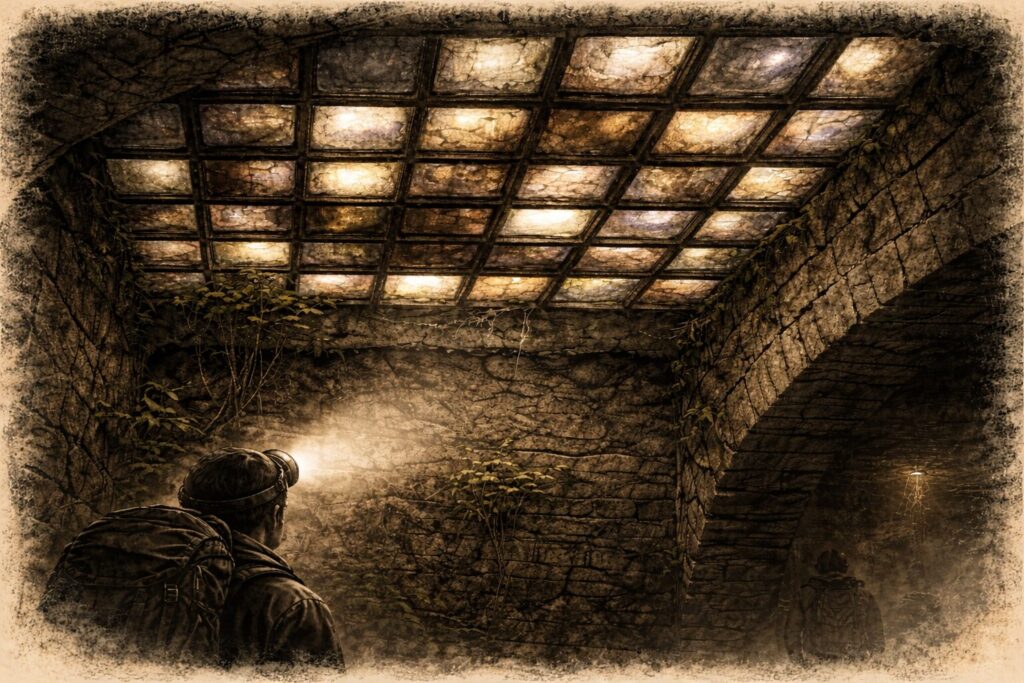
“These are vault lights,” Maya said, touching the wall beside them. “Thick glass set into the sidewalk to let natural light down to the shops below. They’re also called sidewalk prisms or pavement lights. Most cities used them in the late 1800s, but Seattle’s are unique because they’re serving a space that’s no longer at ground level.”
Cooper’s wife—she’d said her name was Siri—looked up at the glass. “So they don’t work anymore.”
“They work. They’re just lighting something they weren’t designed to light. The sun hits the modern sidewalk, filters through twelve feet of urban infrastructure, and barely reaches this brick.”
Hannah was already sketching in her notebook. “This is what displacement looks like. The function remains but the context has been erased.”
“Except the context hasn’t been erased,” Tomasz said. “It’s been preserved by accident. The city built over it instead of demolishing it.”
Ama had been quiet, walking the perimeter of the space. Now she stopped in front of a doorway that opened onto a wall. “When someone says it’s just a basement, show them this. Basements don’t have front doors.”