Mina came to Mantua because of the lovers of valdaro, though for most of the train ride she kept calling it work. Work sounded adult. Work sounded billable. Work sounded less foolish than crossing Lombardy with a blue folder on her lap because a man who no longer lived with her had once written Go to Mantua in the back of her notebook. By the time she stepped into Piazza Sordello and looked up at the long brick body of the Palazzo Ducale, she knew the deadline in Milan was real and the money attached to it was real, but neither was the true reason she had arrived before opening hours with poor sleep in her eyes and Daniel’s handwriting still moving under her skin.
The courtyard stones were damp from early rain. A cleaner pushed water into thin shining lines. The sky above Mantua had the pale, uncertain color of paper left near a window too long. Mina checked her phone and saw nothing from Daniel. She did not know why that stung. He had not promised to answer. He had not promised anything at all.
Inside the National Archaeological Museum of Mantua, the air felt held in place. She moved past displays of blades, axes, and broken vessels without reading the labels. She already knew where she was going.
The room where lovers of valdaro are smaller than grief
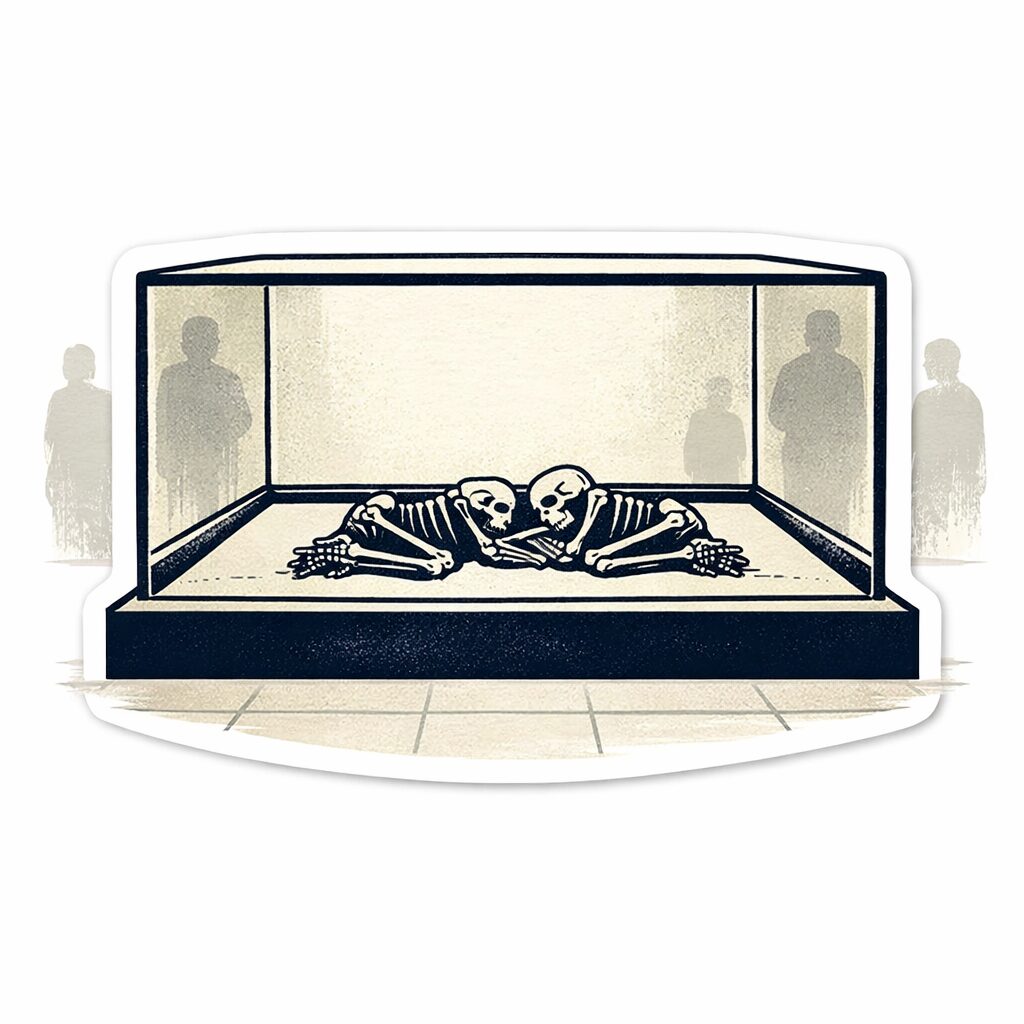
The gallery was smaller than she expected, and quieter. People stood in a shape she recognized at once: that softened, arrested curve of strangers who had all reached the same object and found themselves less talkative in front of it than they had been in the previous room.
Then she saw them.
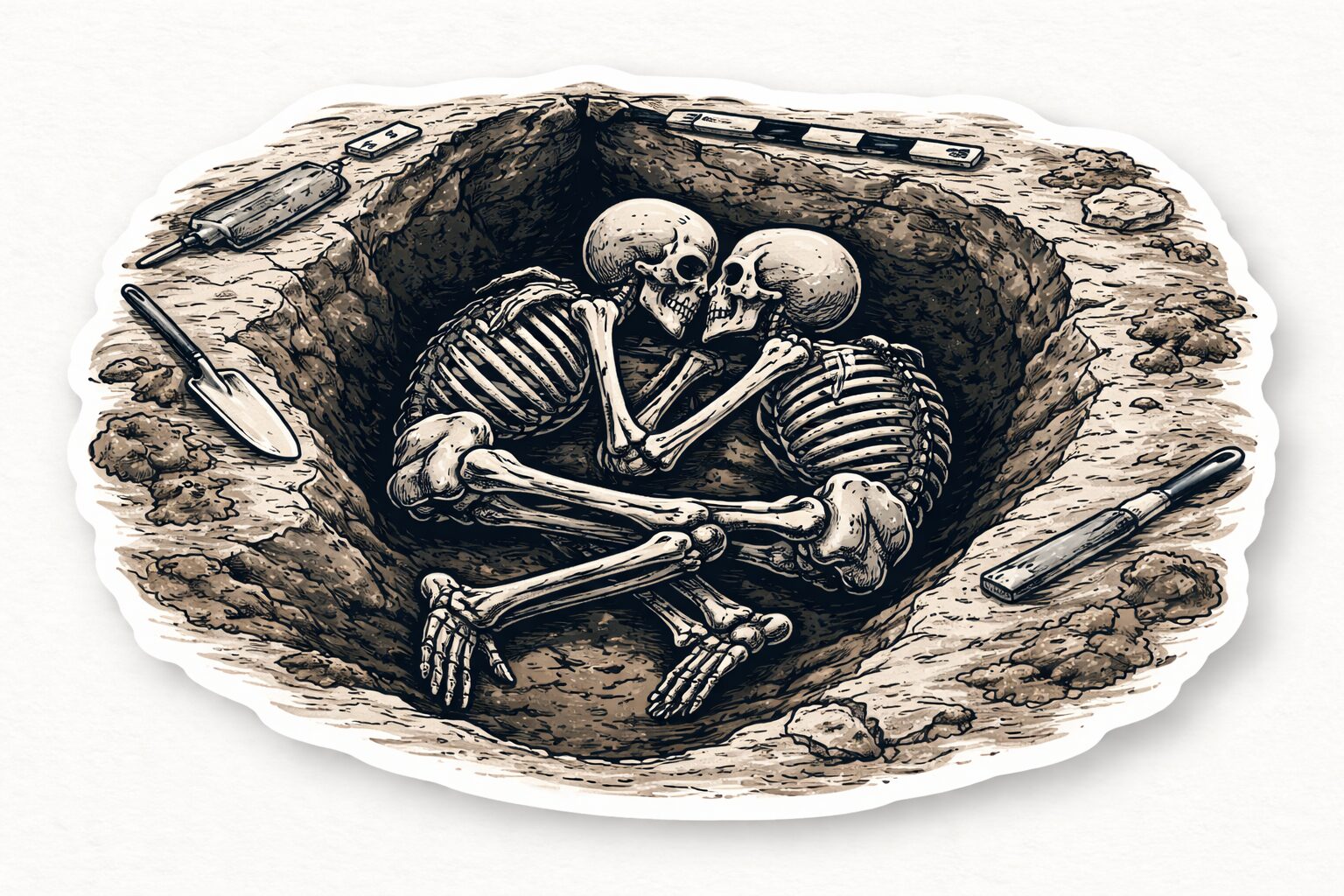
The lovers of valdaro did not appear grand. That was the first surprise. They looked smaller than the image she had carried from articles and museum posts. Two skeletons, face to face. Arms drawn in. Legs folded. Not theatrical. Not arranged for beauty in any modern sense. They occupied less space than a narrow bed.
A woman near Mina whispered to her husband, “They died like that.”
“No,” said a man behind them.
He did not raise his voice, but the correction changed the room all the same. Mina turned and saw a museum staff member with a badge clipped to his jacket and a ring of keys at his belt. He had one of those careful faces that never looked severe but never drifted into softness either.
“They were found together,” he said, speaking to the couple and to the case and perhaps to everyone within hearing. “But not dying. Placed.”
The husband frowned. “How can you tell?”
The man looked at the bones for a moment before answering. “Because the dead do not usually arrange themselves with this much patience.”
A few people smiled. The woman did not.
Mina understood why. What unsettled her was not the tenderness of the pose. It was the intention behind it. Someone had once stood over these bodies and decided that this closeness should survive burial.
On the label, the facts sat in tidy lines: discovered in 2007 near Mantua, in the Valdaro area; Neolithic; young adults; grave goods; cause of death unknown. Mina read it twice and felt almost nothing from the label itself. The emotion was in the distance between the official words and the quiet force of the bones.
The man who corrected the room
She found him later near a display of flint tools, straightening a barrier that had shifted by a few centimeters. He looked like a man whose job required him to be patient with other people’s certainty.
“You corrected them,” Mina said.
“I try to stop the fastest mistakes,” he replied.
“You sounded sure.”
“I sounded careful.”
She almost smiled. “What’s the difference?”
“Sure people like endings,” he said. “Careful people know objects don’t always give them.”
He glanced at her folder, her pen, the notebook in her hand. “You’re writing.”
“Trying to.”
“Journalist?”
“Sometimes.”
“That sounds unstable.”
“It is.”
He nodded as if that answer matched something he already believed about the profession. “Luca Ferretti.”
“Mina.”
He looked back toward the gallery. “First time with them?”
“Yes.”
“Then stay longer than the label tells you to. The label gets frightened when visitors become emotional.”
“Does the museum discourage emotion?”
“No,” Luca said. “Only fiction pretending to be evidence.”
Mina had meant to ask one practical question and leave. Instead she heard herself say, “And what do you think they are?”
He lifted one shoulder. “Two people buried together with great care. After thLater she found exhibition drafts in the second boxat, everyone begins borrowing from themselves.”
The sentence stayed with her. It irritated her because it sounded finished, and because some part of her knew it was true.
When lovers of valdaro refused murder
An hour later, a school group came through the gallery in a wave of jackets and damp shoe soles. One boy, perhaps thirteen, leaned toward the case and said, far too loudly, “So they were killed together?”
His teacher began to answer, then hesitated. Luca stepped in, not rescuing her exactly, only narrowing the room.
“There are objects with them,” he said. “That is not the same thing.”
He pointed to the nearby diagram. Mina moved closer. It marked a flint arrowhead near the neck of one skeleton, a long blade along the thigh of the other, and two knives beneath the pelvis.
The boy brightened. “See? Weapons.”
“Grave goods,” the teacher tried.
“But no wounds?” another child asked.
Luca nodded. “No visible trauma that matches those objects.”
The first boy looked offended by the answer, as if history had refused to provide him with a cleaner plot. “Then why bury them with weapons?”
The teacher opened her mouth again, but Luca answered before she could oversimplify. “Because people do not bury the dead only with explanations. Sometimes they bury them with meaning.”