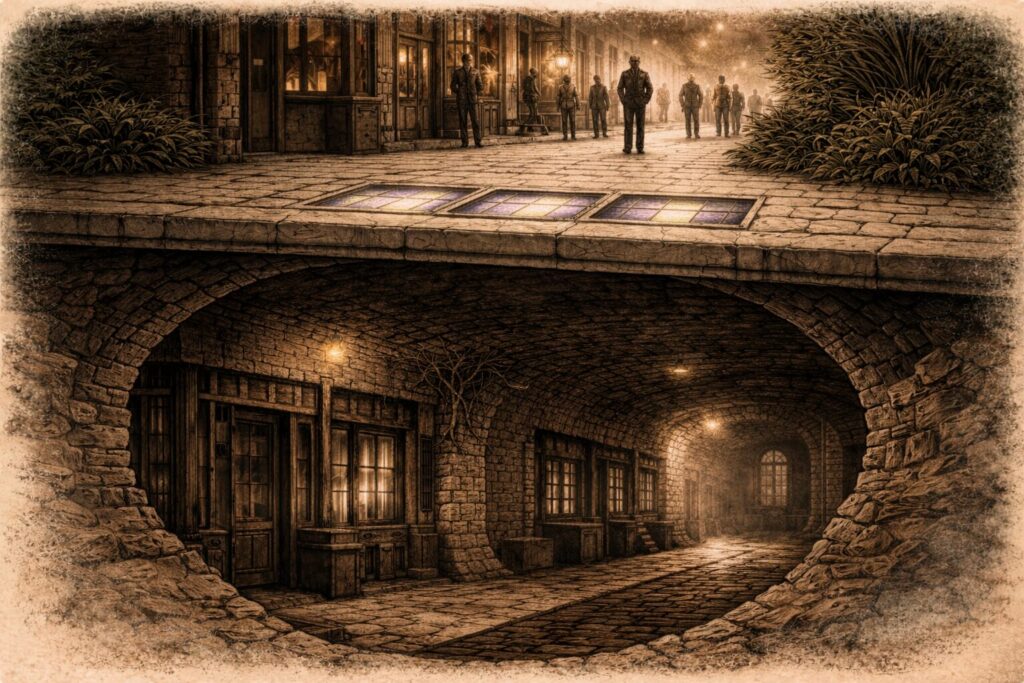
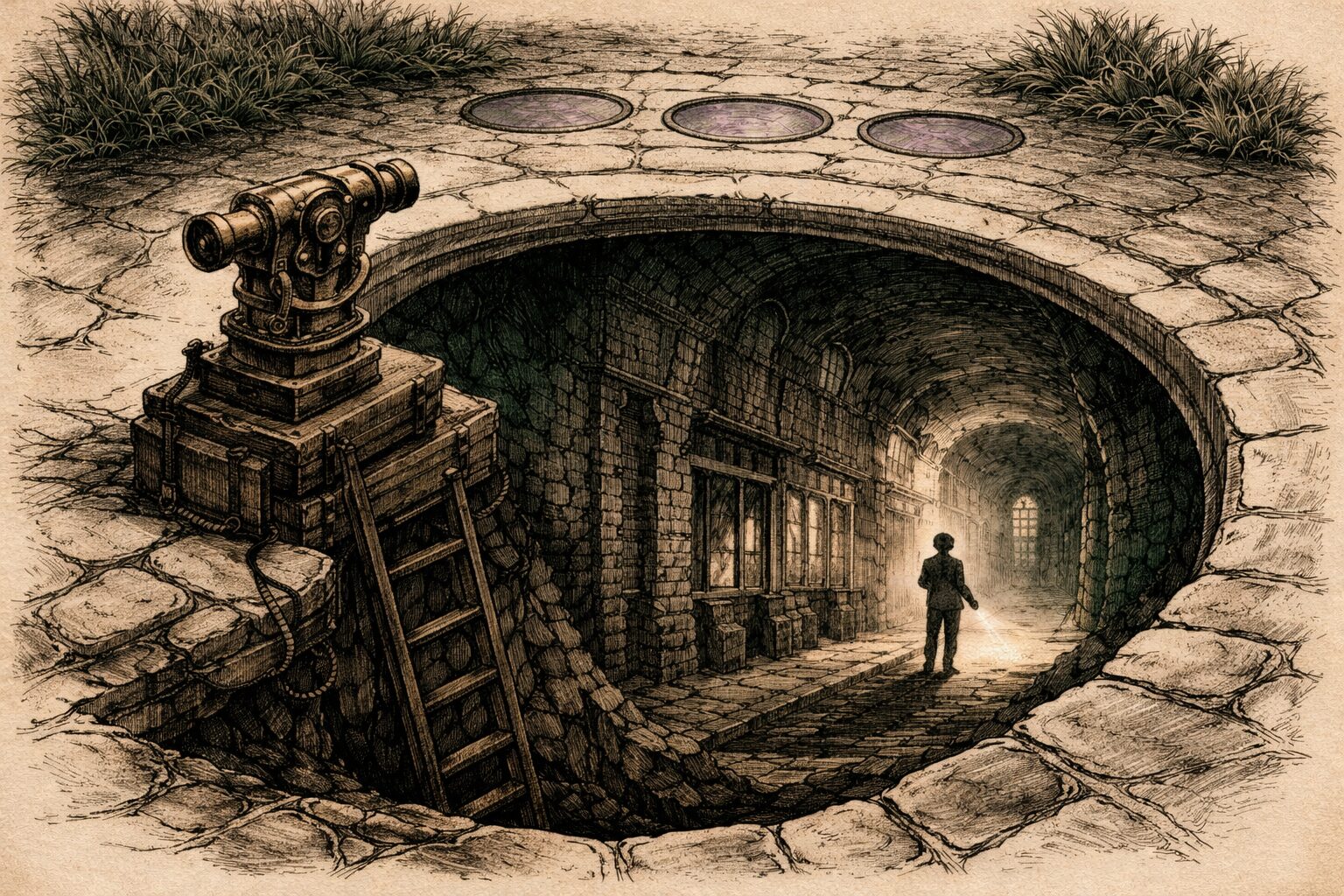
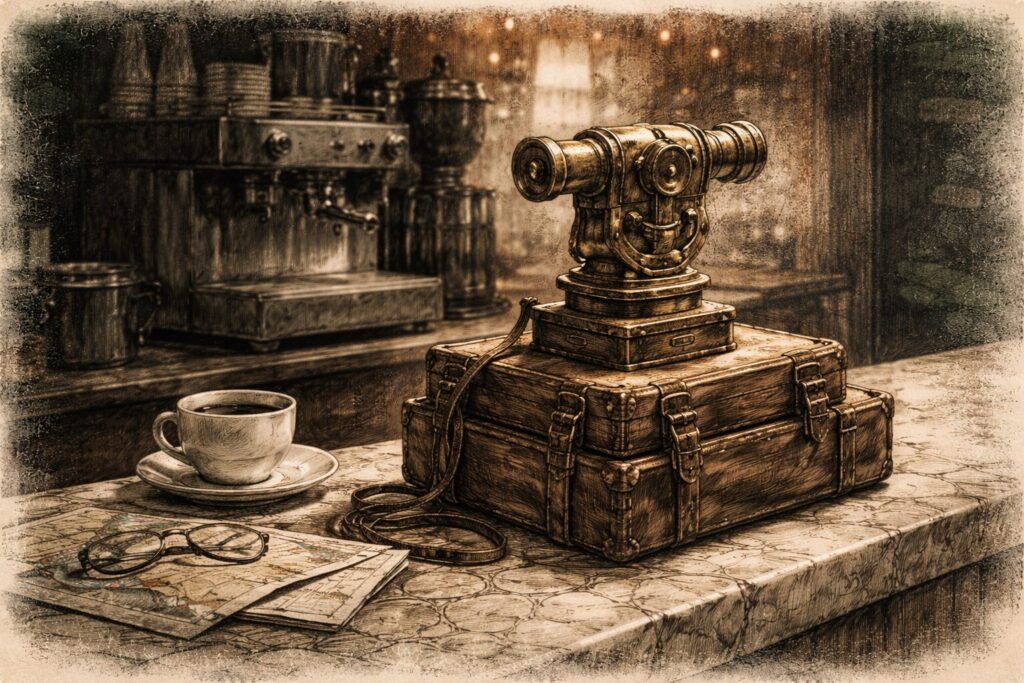
The surveyor’s transit sat on the marble counter like evidence at a trial, its brass eyepiece catching the amber track lighting of the Pike Place Market coffee stand. Maya pressed her thumbnail into the worn leather of its case while the barista—a woman whose nametag read “Jess” in careful Sharpie—wiped down the espresso machine with the methodical rhythm of someone who’d done it ten thousand times. The air smelled of burnt sugar and wet cardboard, and somewhere behind the wall of refrigerated sandwiches, someone was arguing in Mandarin about delivery schedules. Maya had spent three months wrestling with permit applications to open tours of the seattle underground—the buried first floor of a city that had simply built a new street level twelve feet higher and kept going.
“You’re actually taking people down there?” Jess said, not looking up from the machine.
“If the permits come through.” Maya shifted the transit case an inch to the left, then back. “Three months of paperwork to walk through a basement.”
“That’s not a basement.” Jess finally glanced at the transit, then at Maya’s face. “That’s the whole first floor of a city that drowned.”
The front door banged open, bringing in a gust of February rain and a man in a Gore-Tex jacket that still had price creases in the sleeves. He ordered a double Americano in an accent Maya couldn’t immediately place—somewhere in the Balkans, maybe—and stood too close to her elbow while he waited, reading something on his phone with the intensity of someone translating as they went.
Maya pulled the transit closer. The surveyor who’d sold it to her—an elderly man named Frank who’d worked for the city in the seventies—had told her it was the same model they’d used to map the original street grades before the regrade project buried everything. She didn’t entirely believe him, but she liked the weight of the story.
“You need the right shoes,” Jess said, sliding the Americano across the counter. “The ground down there isn’t ground anymore.”
The man in the Gore-Tex jacket picked up his coffee and turned to Maya. “You’re the tour guide?”
“I haven’t started yet.”
“But you’re planning to.” He said it like a conclusion, not a question. “Tomasz Kowalski. I write for travel publications. Someone told me you’re trying to open access to the seattle underground again.”
The phrase came out wrong in his mouth—too formal, like he was reading from a Wikipedia page. Maya felt the small muscles around her eyes tighten. Everyone who heard about the project said “the seattle underground” like it was a single thing, a subway system or a smuggling tunnel. No one understood it was thirty-five blocks of ordinary storefronts and sidewalks that had simply been declared too low after the fire of 1889, buried under a new street level while the city rebuilt itself twelve feet higher.