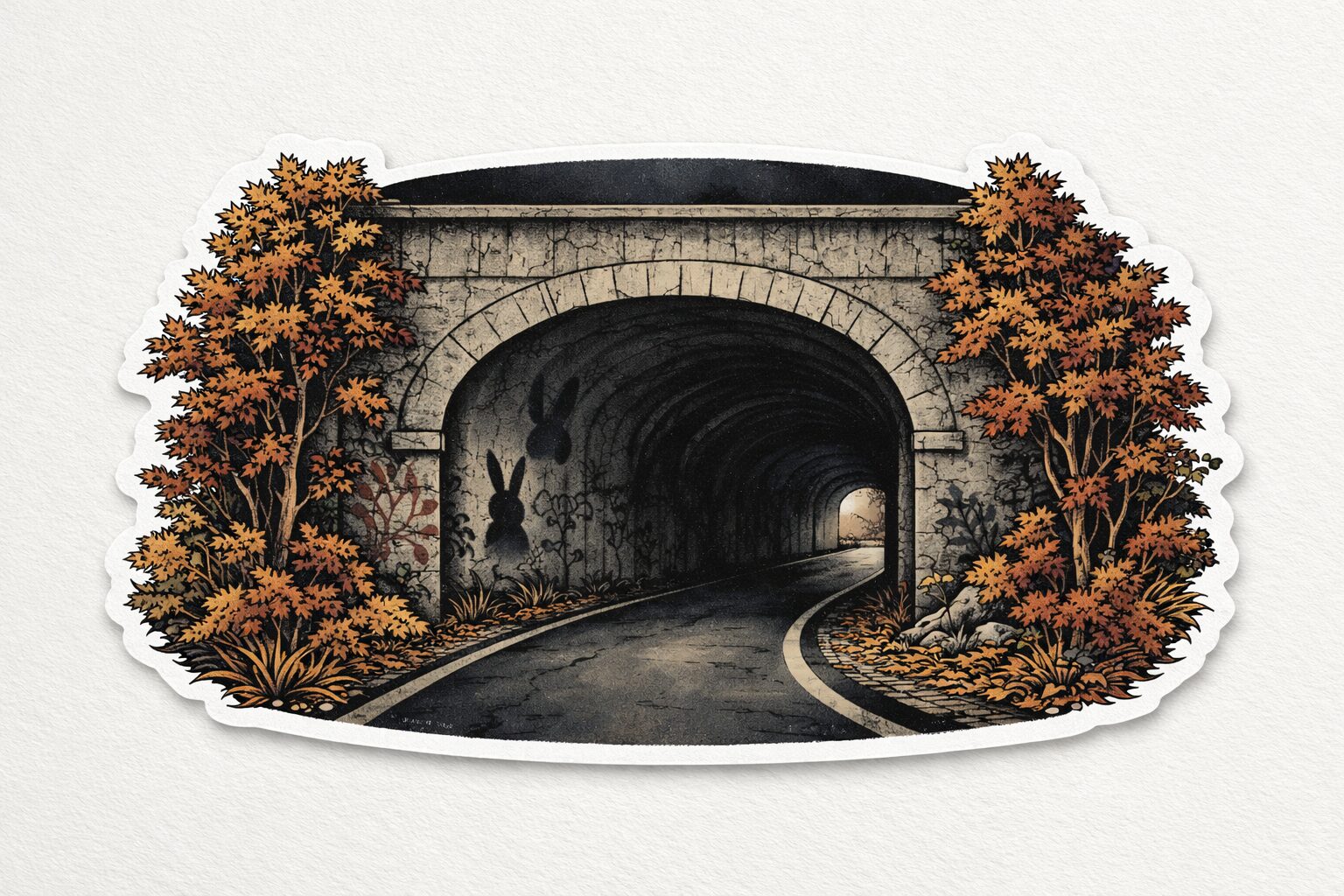
Ren found the legend on a Tuesday night in a motel room in Fairfax, the way most people find things that end up mattering — without looking for them, half-asleep, clicking from one tab to the next while the heater rattled against the window. He’d come to Virginia on a photography assignment. American Places That Feel Like Forgotten, was the brief, which sounded generous until you were three days in with nothing on your memory card that didn’t look exactly like what it was. The woman at the front desk had said, that afternoon, in the tone Virginians use for things they assume the rest of the world already knows: You’re here in October, you have to go to Bunny Man Bridge. He’d looked it up. An hour later he had an asylum, a convict, a ghost, and no idea which version was true. He had also, without quite deciding to, started planning the drive to Clifton.
What he did not have, at that point, was Yusra.
She Was From Here, and She Knew Bunny Man Bridge Before She Knew the Truth
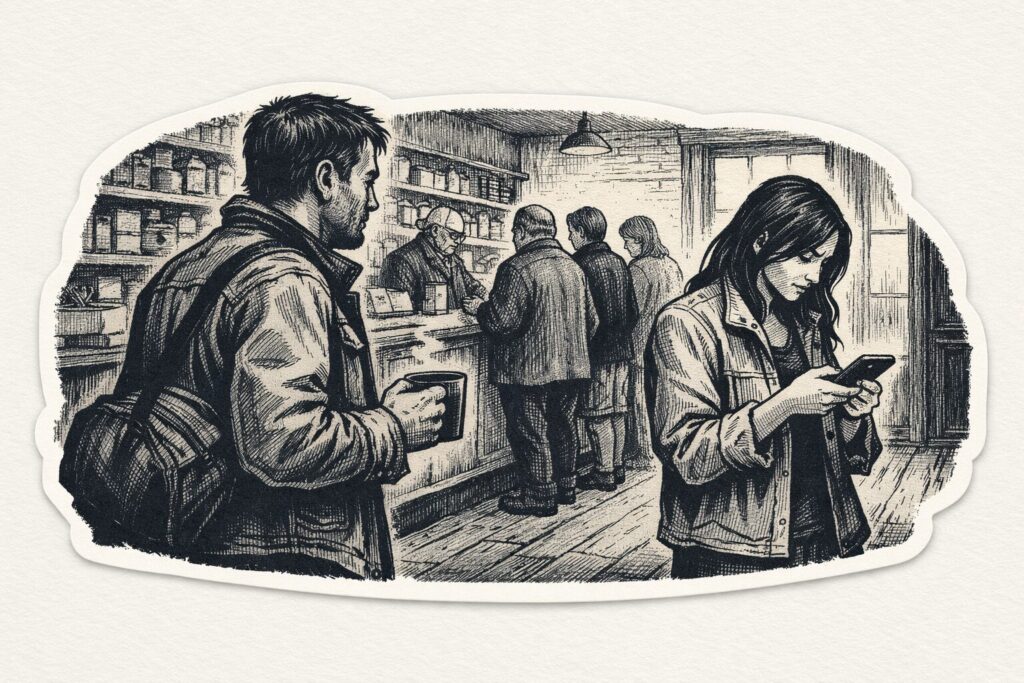
He met her at the Lost Corner Store in Clifton the following morning — a store that had been operating, the painted sign above the door claimed, since 1857, which Ren found hard to credit until he stepped inside and felt the particular weight of old floorboards underfoot. He was behind her in line. She was arguing quietly with her phone’s GPS, which had just routed her through what appeared to be a private driveway for the third time.
“Where are you trying to get to?” he said.
She turned. She had the look of someone from a place assessing someone not from it — not unfriendly, just taking a measurement. “Guinea Road,” she said. “In Burke.”
He didn’t know Guinea Road. He said so.
“Most people don’t,” she said, “until they start reading about the Bunny Man.”
Something in his expression must have given him away, because she looked at him more carefully then. “You’ve been reading about it.”
“Last night,” he said. “The asylum version. The convict — Douglas Grifon. The bodies on the bridge.”
She made a sound that was not quite a laugh. “The internet version,” she said. “Right.”
“Is there another version?”
The woman behind the counter handed them their coffees. Yusra looked at him for a moment with the expression of someone deciding how much of a detour they’re willing to make. Then she said: “I grew up here. My mother grew up here. My grandmother used to tell us not to go to the bridge at Halloween.”
“But?”
“But I never actually went to Guinea Road,” she said. “Which is where it started. Not the bridge. Guinea Road, which is twenty miles from the bridge, and nobody talks about that part.”
She picked up her coffee. He picked up his.