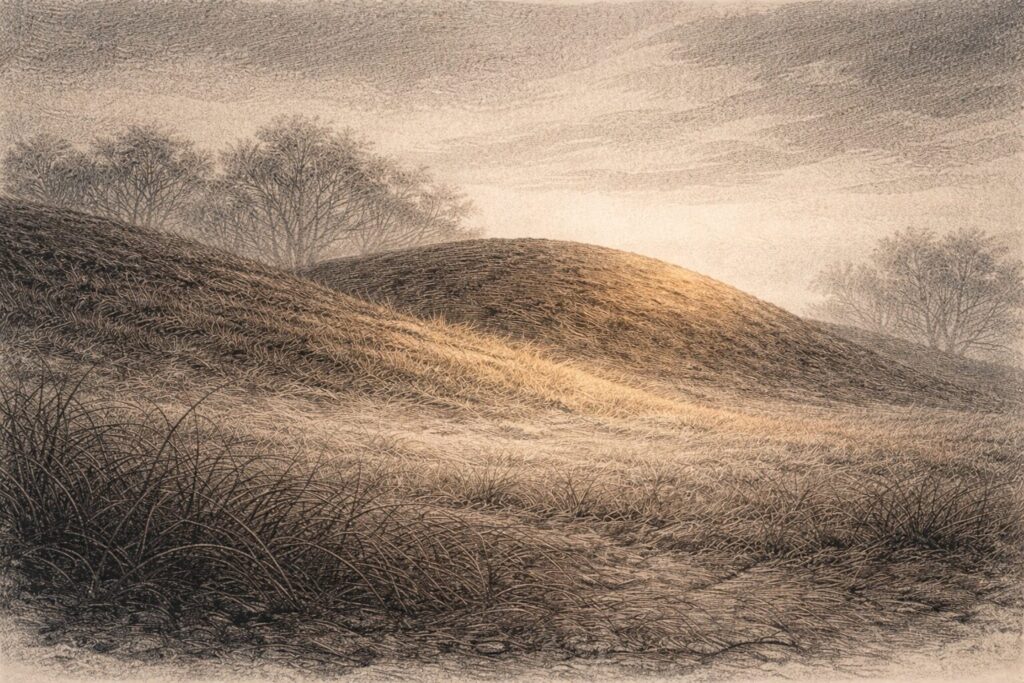
The three burial mounds behind the Gamla Uppsala Museum were at their quietest in October, when the last of the summer visitors had gone and the grass on the slopes turned dry and pale. Lena Strand was the museum’s archivist, and she had always preferred it this way — fewer people, less noise, the kind of stillness the work actually needed. She was not, by nature, someone who entertained large ideas about old places. The phrase time slip belonged to a certain kind of visitor, the kind who stood at the base of the mounds with their phones out, half-hoping the ground would do something. She had heard about it, but had never once felt the pull of it — until that particular Tuesday.
The photograph had been filed under the wrong year — or perhaps the right one
She had worked in the museum’s archive room long enough to know every corner of it: which boxes smelled of water damage, which shelves tilted slightly to the left, and where each category of document was stored. Because of this deep familiarity, it was immediately strange when she found something that did not belong.
She was working on a Tuesday in October, going through a sealed box from the 1980 accession. The box held old surveyor sketches and parish records. Tucked between a sketch from 1919 and a census from 1931 was a photograph she had never seen before. It was labeled in pencil on the back: Gamla Uppsala högar, 1923. The handwriting was not hers. But the way the letters were formed — the slight lean of the ‘G,’ the short tail on the ‘h’ — felt exactly like her handwriting.

That was the first strange thing.
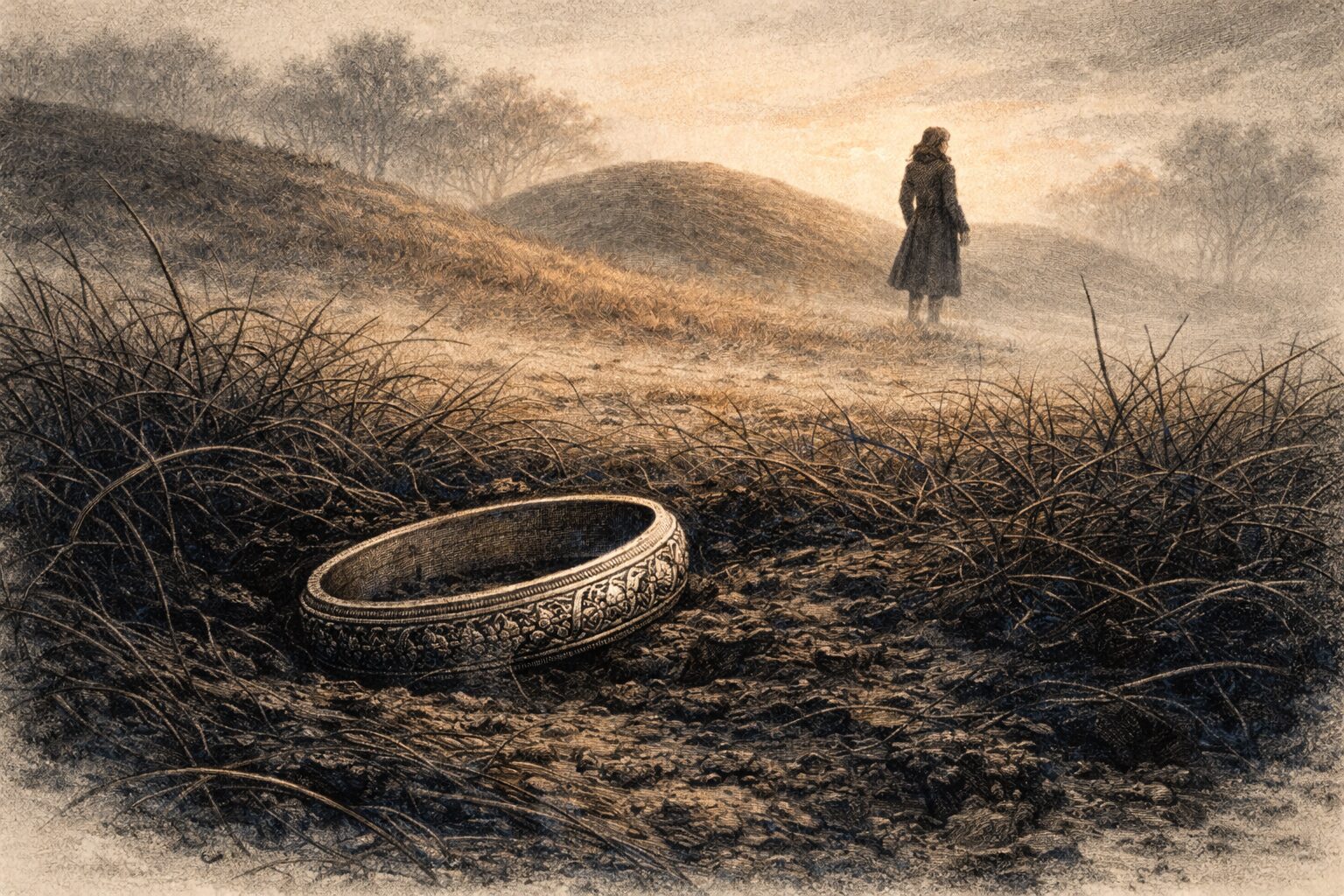
The photograph showed a woman standing on the northern slope of the largest of the three great burial mounds that sat just outside the museum. The mounds had been there for approximately fifteen hundred years. Lena found them comforting on most mornings. On this particular morning, she was not sure how she felt about them.
In the photograph, the woman had her back partly turned to the camera. She was wearing a long, dark coat with a wide collar. Her right hand was raised slightly, as if she had just heard a sound behind her and had begun to turn toward it. The light in the photograph was strange — not the flat gray you would expect from a Swedish autumn, but a warm amber color, the kind that usually arrived on late summer afternoons. The grass in the image, though, was the dry brown of early autumn. The light and the season did not match.
Lena set the photograph down on the work table. Then she picked it up again.
Something about the woman’s posture was familiar. It was not the face — the face was barely visible. It was the angle of the shoulder, and the way the woman’s weight rested on her left hip. Lena had seen that exact posture before, in a box of old family photographs that her mother kept in a bedroom cupboard. Her grandmother, Astrid, was photographed in that same pose at a midsommar party sometime in the 1950s. The same left-weighted stance. The same angle of the shoulder.
Lena told herself it was coincidence. She went to make coffee.