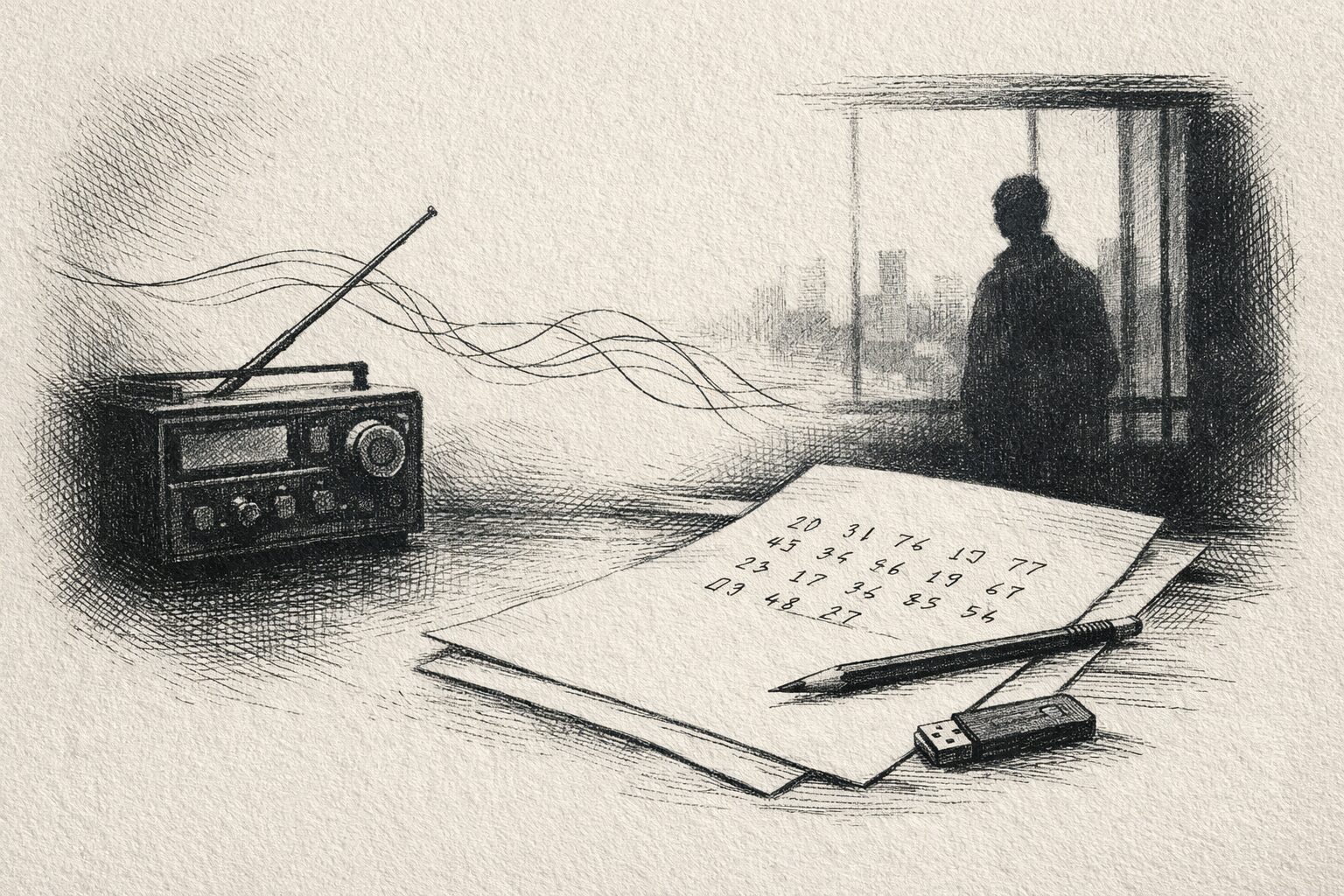
We moved upward, not away, and the air changed
Alma led us through a staff corridor where the walls lost their pretty polish. The building’s backstage smelled of dust and warm wiring. A fluorescent light flickered once, like a nervous blink.
We climbed a stairwell that echoed our steps. Lucía held the envelope tight against her chest. Sunil carried his receiver like a fragile animal. I kept my hands empty, as if that would make me harmless.
At the maintenance hatch, Alma lifted a key ring that looked older than the library itself. She chose a key without looking.
“Up,” she said, and pushed.
The roof air hit us with the dry smell of city heat and distant exhaust. From up here, Mexico City spread in layers—glass towers, low rooftops, the faint shape of mountains under haze. The library’s own roof had ductwork and vents that made low, steady sounds, like the building breathing.
Alma crouched near a vent and pointed. “You can see the main entrance from here. If he comes with papers, you’ll know.”
Lucía stared down at the tiny figures moving inside the glass building. “We shouldn’t be doing this.”
Sunil said, “We already are.”
I turned the receiver on. Static filled the air in short bursts. Sunil adjusted the dial with careful fingers, scanning.
“What are you doing?” Lucía asked.
Sunil didn’t look up. “If a numbers station broadcast was recorded recently, there’s a chance the same frequency is active. Not high. But possible.”
Alma watched the horizon, not the receiver. “And if it’s active, you can… what? Catch it again?”
Sunil nodded. “And that gives you time. Proof. A second capture is harder to call a planted file.”
The radio hissed. Then a tone, faint but clear, rose like a needle finding a groove.
Lucía’s breath caught. “Is that it?”
Sunil’s eyes narrowed. “Maybe.”
The tone repeated. Then silence. Then the same flat female voice, distant through the receiver’s speaker.
Numbers, again.
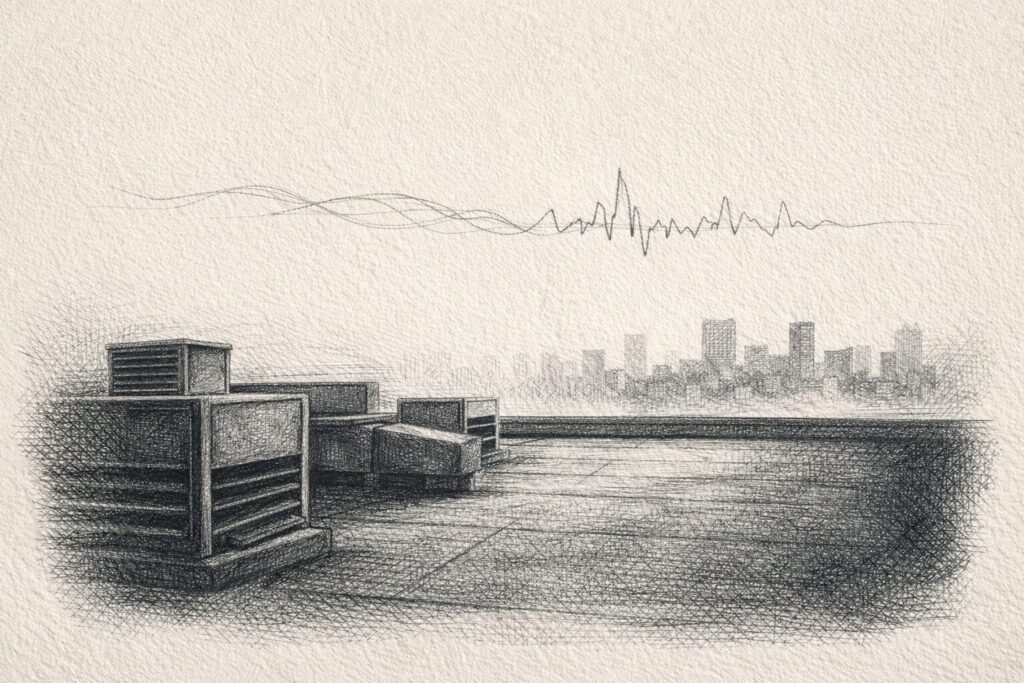
A numbers station, live—or close enough to feel live.
For a moment, the city noise seemed to step back, letting the voice stand alone on the roof.
The outsider test wasn’t about decoding, it was about daring to listen
Lucía looked like she wanted to drop the receiver.
“That’s… impossible,” she said.
“It’s not impossible,” Sunil replied. “It’s just rare to catch by accident. The schedules can be regular, but they’re not public. Some people track them. Some record them. Most people never notice.”
Alma asked, “Can you decode it?”
Sunil shook his head. “Without the pad? No. And that’s the point. The listener could be anywhere. The message could be for one person.”
Lucía’s voice went thin. “Then what can we do?”
I said, “We can prove what it is, and we can show the misconception is wrong. That matters because it changes what fear looks like.”
Lucía stared at me like she hated that sentence, then realized she needed it.
“Show me,” she said. “Show me why it’s not a public puzzle. Show me why it matters without turning us into… actors.”
Sunil took a small notebook from his bag, already half-filled with frequencies and dates. He wrote the time, the frequency, the tone pattern. He didn’t act excited. He acted careful.
“This is how it works,” he said, still not teaching, just doing. “You log it. You capture it. You compare it. If the marker repeats across broadcasts, you can identify the station as an entity—even if you don’t know where it is.”
He held the notebook out to Lucía. “Write the numbers you hear. Not because you’ll decode them, but because writing is how you respect the signal. You become a witness, not a consumer.”
Lucía hesitated, then took the pencil. Her hand shook once, then steadied. She began to write, each number a small act of bravery she hadn’t planned to perform today.
Alma watched her, quiet. The ink on Alma’s fingers looked darker in the sunlight.
The voice continued, indifferent. It didn’t reward us. It didn’t threaten us. It simply existed, like a door that stayed locked no matter how politely you knocked.
The man with the folder returned, and the roof didn’t hide us
Alma stiffened first. She pointed down through a gap between vents.
“He’s at the entrance,” she said. “With someone else.”
Lucía stopped writing. Sunil lowered the volume. The voice kept talking anyway, as if it knew we were watching.
Through the glass far below, I saw the man in the dark jacket, now with a second person beside him—taller, carrying a bag that looked official enough to make people step aside.
Lucía’s face went pale. “They’re going to the director.”
Alma’s jaw tightened. “Or they’re going around the director.”
Sunil snapped a short recording on his device—just enough to show the live capture’s timestamp.
“We have proof,” he said. “Now you decide what proof is for.”