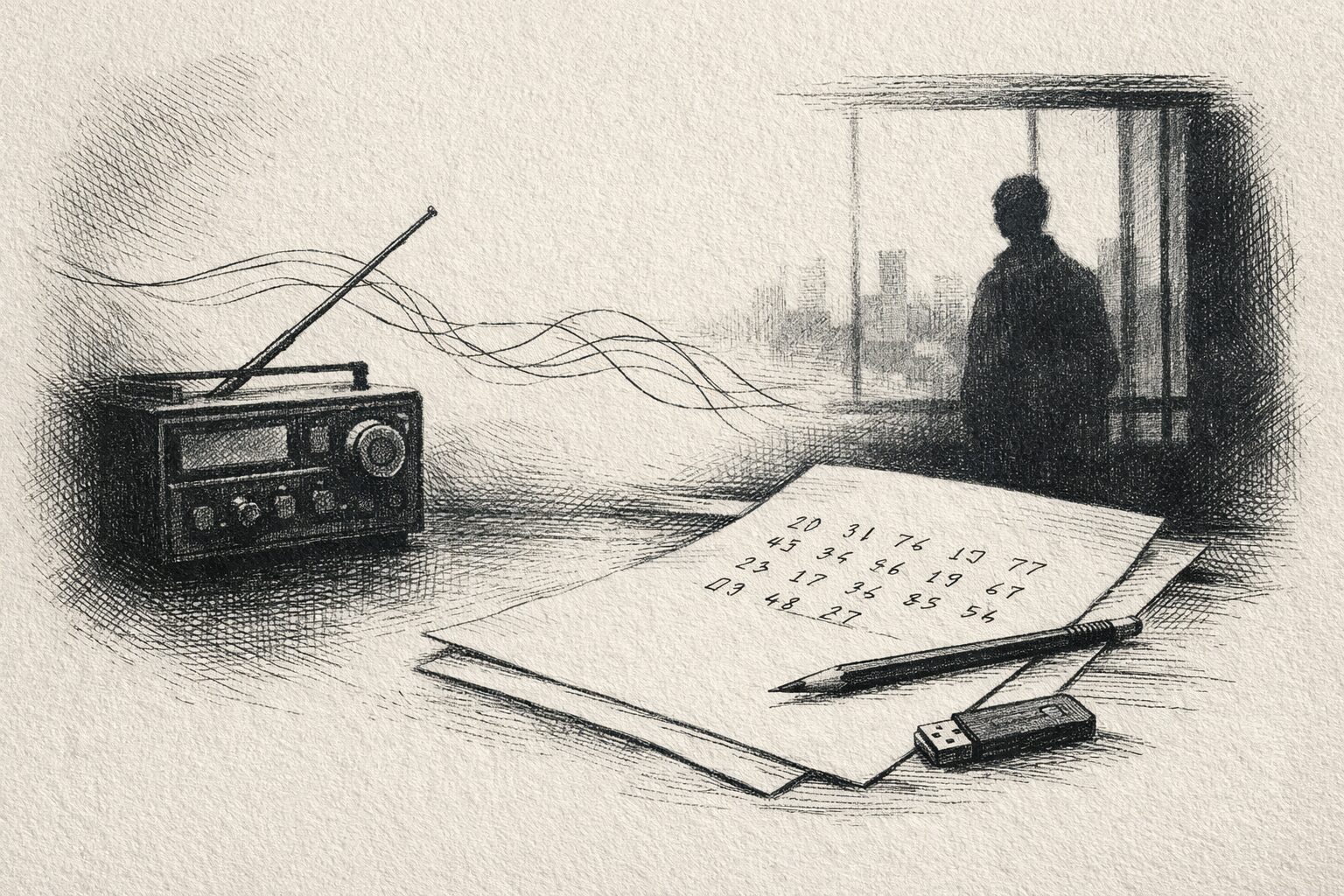
Lucía clutched her notebook page like it was a piece of herself. The numbers on it looked harmless. But the act of writing them felt like crossing a line.
“I can’t give them the envelope,” she said, voice low. “If I do, it disappears into a drawer and becomes nothing but someone else’s story.”
I said, “Then you don’t give it. You archive it properly.”
Lucía blinked. “Properly?”
Sunil nodded. “Catalog it as what it is: a recording of a suspected numbers station transmission, with the live capture as corroboration. You don’t claim what you can’t prove. You don’t say ‘spy.’ You say ‘unidentified shortwave numeric broadcast.’ You keep it in the library’s truth.”
Alma added, “And you don’t do it alone.”
Lucía looked at each of us. Her eyes moved like she was counting exits, counting risks, counting who would walk away if things turned sharp.
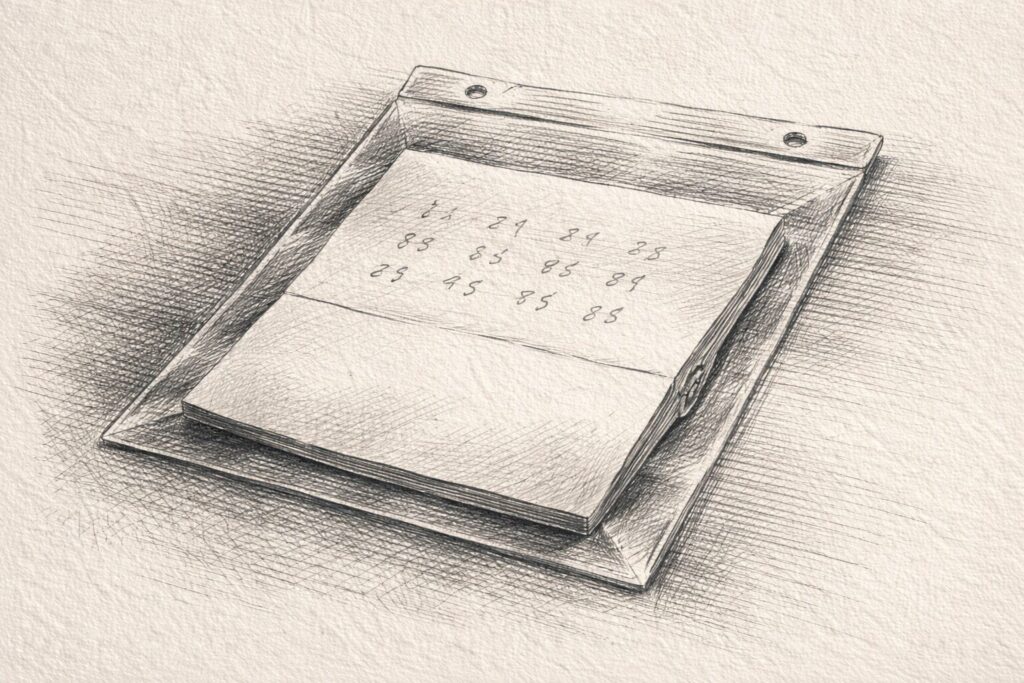
Then she did something small that changed everything: she tore the page with the numbers from the notebook—not to hide it, but to separate it from the rest. She folded it carefully, once, twice, and slipped it into the envelope with the flash drive.
Not hiding. Binding.
A choice.
“We go to the director,” she said. “Now. Before they make their request sound official.”
Outside, the voice on the receiver kept reading digits into the sky, as if daring us to pretend we hadn’t heard it.
The numbers station stayed cold, but our hands didn’t
We moved fast through the stairwell, down into the library’s bright body. The public floor was full of ordinary life: students leaning over notebooks, a couple whispering over a map, a child tracing a finger along a sign that said Silencio with a serious face.
The smell of coffee from the café area drifted faintly—warm, forgiving. The library’s polished floor reflected our shoes like a second, quieter world.
At the director’s office, a receptionist looked up, startled by our urgency. Alma didn’t slow down.
“Tell her it’s media security,” Alma said, and her voice made it sound like the truth, not a performance.
The receptionist hesitated, then stood and knocked.
From inside, voices spilled out—one smooth, one measured. The man with the folder was already there.
Lucía tightened her grip on the envelope. Sunil stood slightly behind her, receiver tucked away. Alma placed herself between the door and the hallway, as if she could physically hold back whatever came next.
The door opened.
A woman with silver hair and tired eyes appeared—the director, calm in the way only practiced calm can be. Behind her, the man in the dark jacket turned, his smile ready.
Lucía stepped forward before anyone could stop her.
“This belongs to the library,” she said, holding the envelope out—not offering it to the man, but showing it to the director. “It is evidence of an unidentified shortwave numeric broadcast. And we captured it live from the roof today.”
The director’s eyes flicked to the envelope, then to Lucía’s face. A flicker of something—respect, maybe. Or worry.
The man’s smile didn’t change, but his eyes hardened.
“That recording could incite panic,” he said smoothly. “We’re authorized to secure it.”
Lucía’s voice stayed steady. “It will not incite anything if we describe it accurately. People fear what they are told to fear. The real fear is when records vanish.”
The director inhaled slowly. “What exactly are you claiming?”
Lucía glanced at Sunil, then back. “Only what we can prove. That it matches a numbers station format. That it was captured live. That the file was hidden in a book. Nothing more.”
Silence stretched, filled by the distant murmur of the library’s normal life—pages turning, chairs shifting, someone coughing politely into a sleeve.
The director nodded once. “We will catalog it as an unidentified broadcast recording. Any removal requires a formal order. Not a request. Not a suggestion.”
The man’s smile slipped, just a fraction. Enough to show he was human.
He said, “You’re making this difficult.”
Lucía looked at him with a calm that didn’t come from safety. It came from decision.
“No,” she said. “I’m making it visible.”