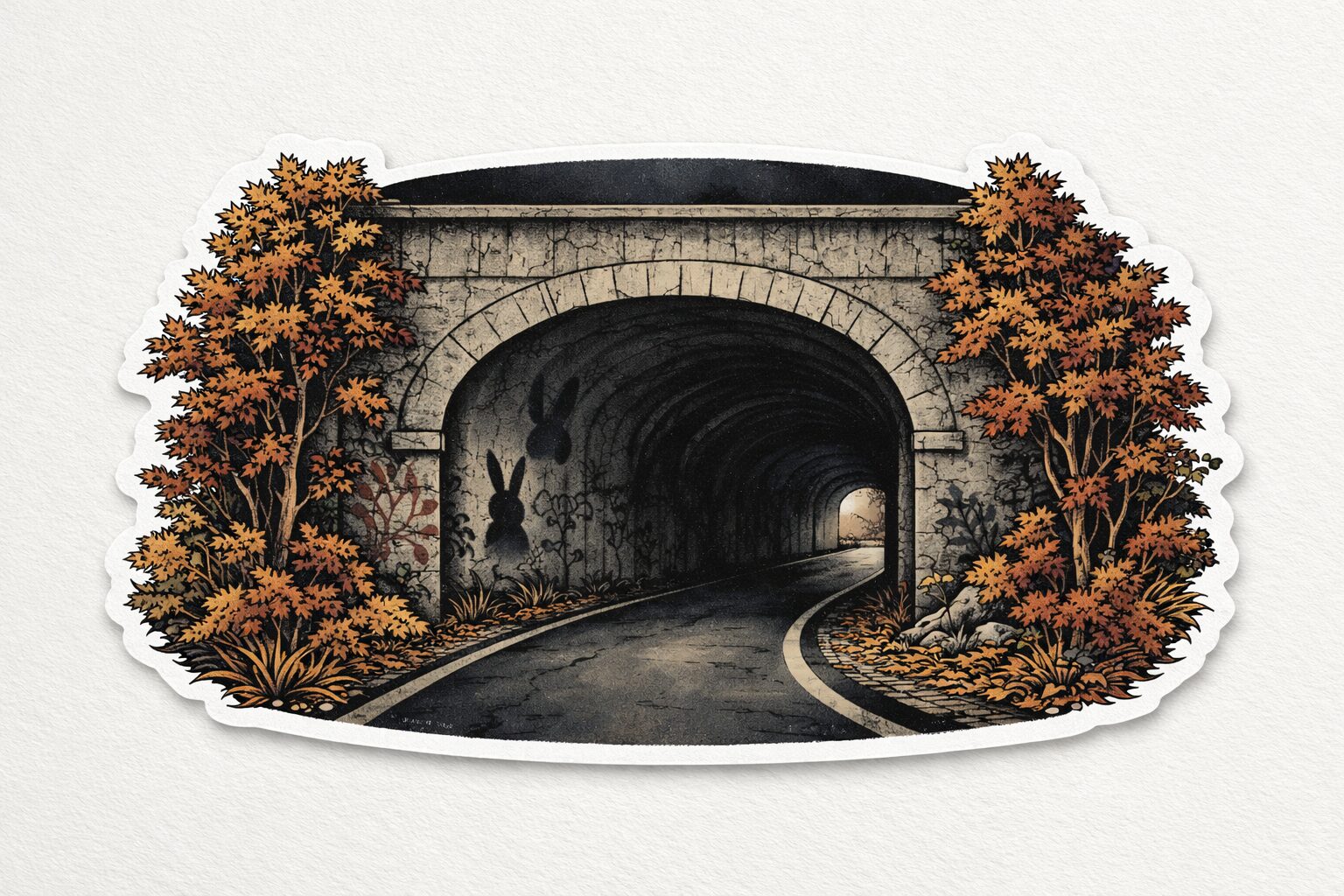
Outside, through the old glass of the store window, the October morning was doing everything an October morning in Virginia knows how to do — the maples along Main Street burning orange and the light coming sideways through them, making the town look like it was being seen through amber.
“I have a car,” he said.
“I have directions,” she said. “The ones that don’t go through anyone’s driveway.”
Guinea Road Doesn’t Look Like the Beginning of Anything
Burke, Virginia was the kind of suburb that had grown over farmland quickly enough that the farmland occasionally pushed back through — old tree lines where fence rows used to be, the odd hollow that drainage channels had turned into something almost scenic. Guinea Road ran through a quiet residential grid, past split-level houses and cul-de-sacs and the kind of mature oaks that told you this had all been built out around 1970, which was, Yusra noted, almost exactly right.
“This is it?” Ren said.
He’d pulled the car to the side of the road at a stretch that looked like every other stretch — houses set back from the pavement, leaves on the sidewalk, a basketball hoop at the end of a driveway with a flat-looking ball underneath it.
“This general area,” Yusra said, looking out the window. “The first incident was somewhere along here. October 19th, 1970. An Air Force cadet and his fiancée parked on the road. A man in a white rabbit costume appeared behind the car, threw a hatchet through the window, and skipped away.”
Ren looked at the street. It was a completely ordinary street. “Skipped.”
“That’s the word in the police report. Skipped.”
He sat with that for a moment. He’d expected something — some atmospheric quality to the location, some visual hook. The street offered nothing except its ordinariness. Two doors down, someone had put a plastic skeleton on their porch for Halloween, the kind with the jointed limbs that moved in the wind.
“And the asylum,” he said. “The backstory.”
Yusra opened her door. “Come on,” she said. “There’s something I want to show you.”
What the Neighbor on the Corner Said About Bunny Man Bridge
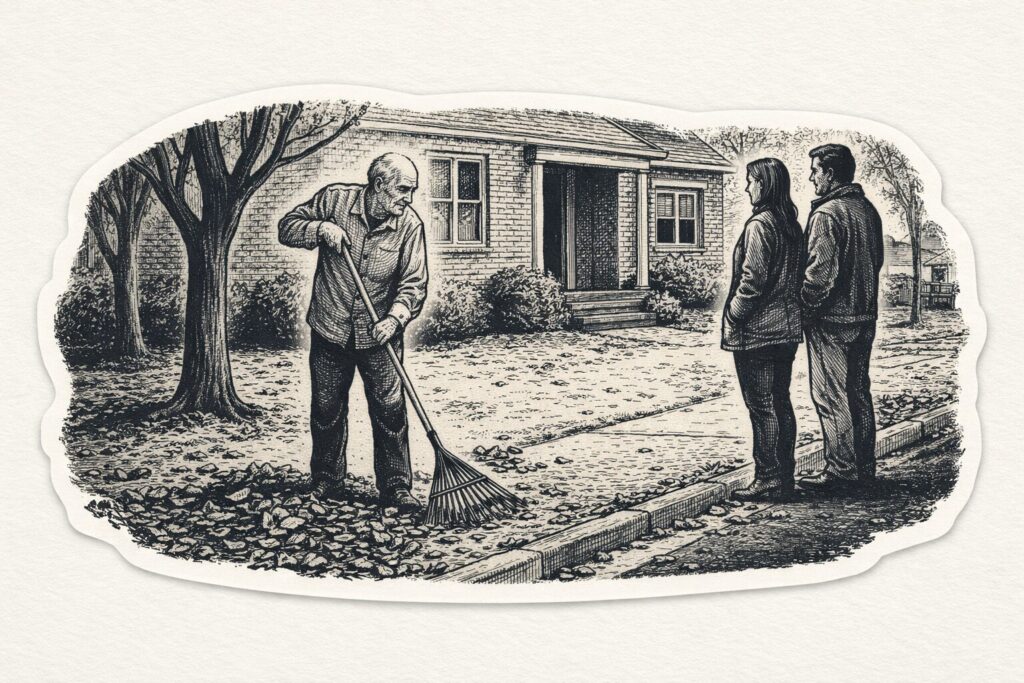
She walked him to the end of the block, where a man in his seventies was raking leaves in the front yard of a brick colonial — the deliberate, unhurried work of someone with nowhere else to be. He looked up when they approached, and something in his expression shifted when Yusra mentioned the story, not suspicion exactly, more like a door opening onto a room he kept locked out of habit.
His name was Walt. He’d lived on Guinea Road since 1968. He told them this while continuing to rake, as though standing still would make the conversation too formal.
“The rabbit man,” he said. “Yeah. My wife called the police, actually. Second week of November 1970. We saw something — or she said she saw something — over on the next block. White, moving fast. I don’t know what it was. By the time I looked it was gone.” He paused. “The police came. Took notes. Told us there’d been reports all over the county.”
“All over the county?” Ren said.
Walt nodded. “Fairfax. Washington. Prince George’s. Dozens of calls, they said. Some of them were probably people seeing things that weren’t there. October, Halloween coming, everybody jumpy. But the original thing — the cadet, the hatchet — that was real. They had the hatchet. Evidence room.”
Ren had his camera in his hand but hadn’t lifted it. “What about the asylum?” he said. “The story about the convict who escaped — Grifon, Douglas Grifon —”
Walt stopped raking. He looked at Ren with the mild, measured expression of a man who has heard something that doesn’t match anything in his experience. “What asylum?” he said.
“There’s a story online,” Yusra said carefully. “It says there was an asylum near Clifton, and a prisoner was transferred on a bus, and the bus crashed near the bridge in 1904, and prisoners escaped, and one of them — named Grifon — was never caught, and his ghost comes back every Halloween.”
Walt looked at her. Then he looked at Ren. Then he looked back at the leaves he was raking, as though checking they were still there.
“I’ve lived on this road for fifty-six years,” he said. “There was no asylum near Clifton. There was no bus crash. I don’t know who Douglas Grifon is.” He picked up his rake again. “What there was — was a man in a rabbit suit, twice, on this road, in October 1970, who threw a hatchet and threatened a security guard and was never identified. That’s it. That’s the whole thing.”
They walked back to the car in the kind of quiet that follows having a story taken apart in front of you.