What Appeared on the Fourth Night
He almost missed it.
He was logging a cargo barge at 0108 — heavy load, sitting low, moving north toward Chittagong, engine noise arriving a full minute before the lights — when something at the edge of his visibility range caught him in the way that peripheral movement catches you, not a full sight but a registration, the brain flagging something before the eyes have agreed to look.
He looked.
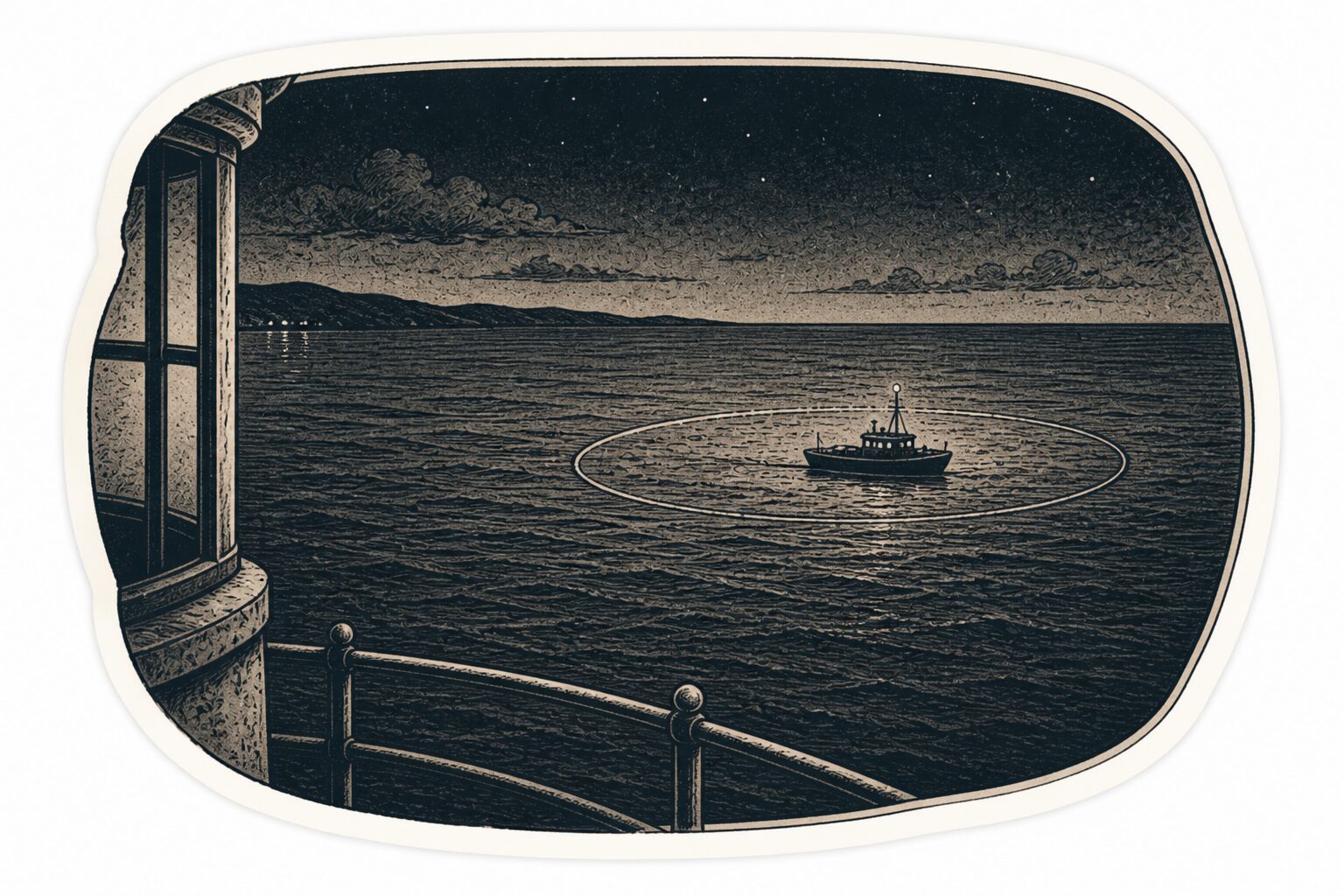
A vessel, running through the inner channel. White masthead light. Green starboard light. Moving slowly — three, maybe four knots — in a direction that wasn’t quite the direction anything used at this hour. No engine sound that he could distinguish from the barge’s fading thrum. He checked the AIS monitor. The cargo barge was there, its signal clean and correct. Nothing else.
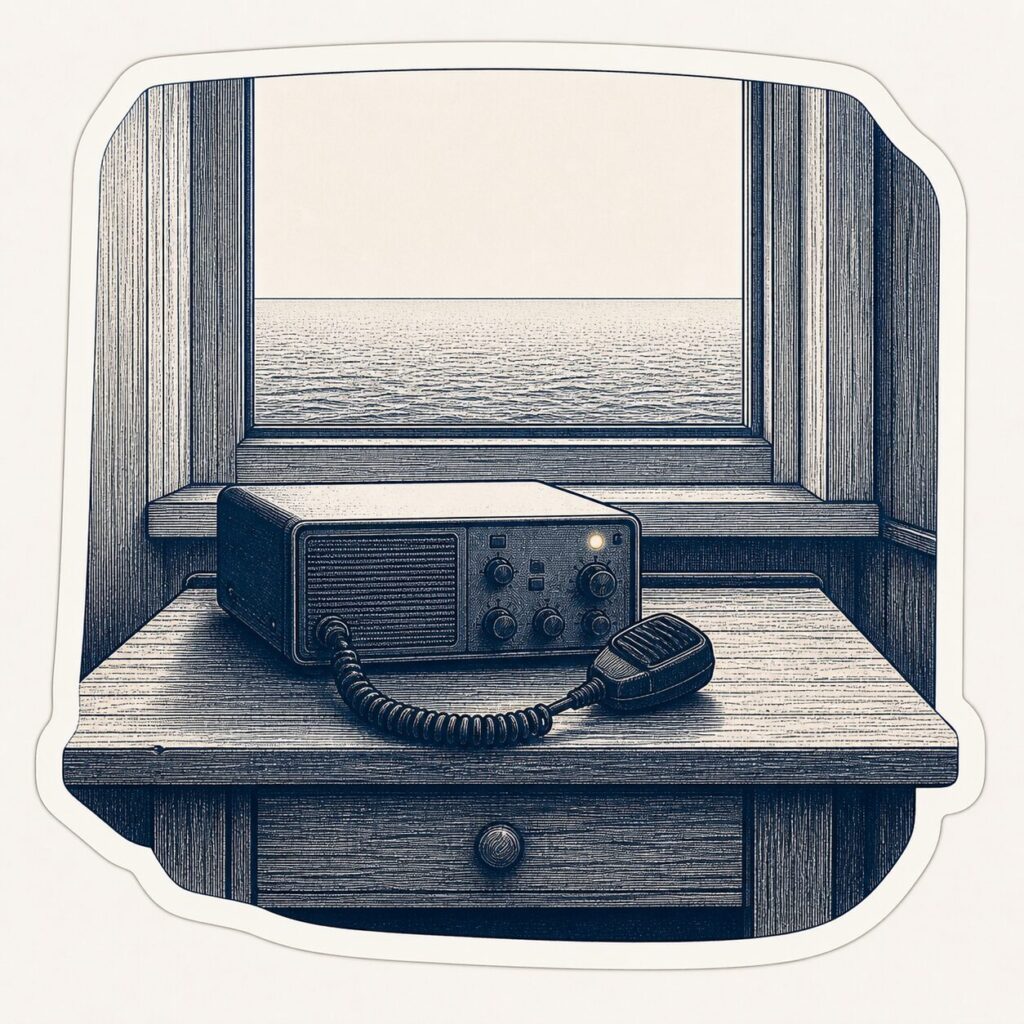
He pressed transmit on Channel 16. “Unidentified vessel, Kutubdia inner channel, this is Kutubdia Light Station. Please identify.”
Nothing.
He waited thirty seconds and tried again. The radio returned only the soft static that sounded, on quiet nights, uncomfortably like breathing.
He watched the vessel until it passed the southern headland and disappeared. Then he sat very still for a moment with his hand on the logbook, aware that he was about to write something down that he didn’t have an explanation for, and that writing it down was a choice — a small one, maybe, but a choice with a specific weight to it.
He wrote it down.
0112. Unidentified vessel, inner channel. White masthead, green starboard. South heading. Speed approx. 3–4 kts. No AIS signal. No response on Ch. 16. Silhouette narrow, possibly survey-type configuration.
He stared at the entry for a while. Then he closed the logbook and stood at the window and watched the southern headland where the vessel had been, as though it might come back.
It didn’t.
But it came back the next night.
The Lighthouse Keeper Begins to Map Something He Can’t Name
By the sixth night, Karim had stopped pretending the vessel was incidental.
It came between 0100 and 0200 without exception. Same heading. Same approximate speed. Same inner channel, which was shallower than the outer approaches and used primarily by smaller craft during daylight hours — fishing boats, the occasional inter-island ferry running late. Not, as far as Karim could determine from eleven years of logbook entries he had now read thoroughly, by any vessel running a consistent night route.
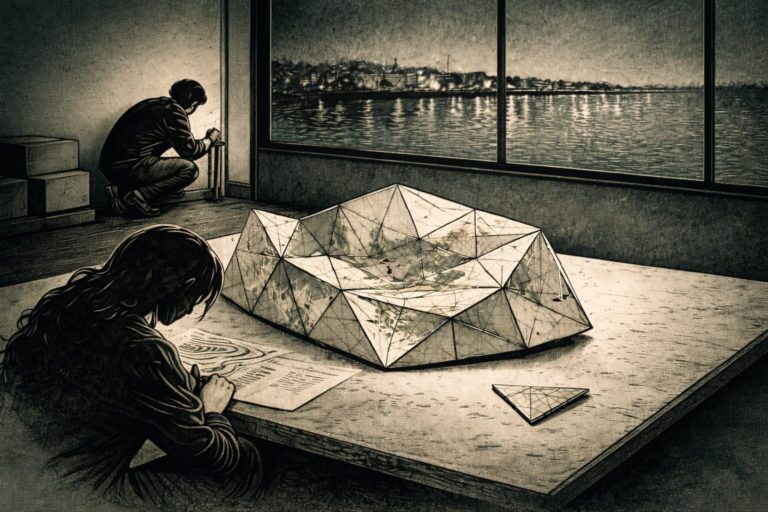
He pulled a paper chart from the station’s supply drawer — an old one, printed before the last survey update, the ink slightly faded at the fold lines — and began marking the sightings. Each X at the approximate position, each notation of the time. After six nights, the Xs formed a line so precise it was almost architectural. Not a wandering boat. Not a vessel that had lost its way or was running opportunistically. Something running a deliberate track, returning to the same coordinates each night with a consistency that required either navigation equipment or a knowledge of this channel so deep it had become instinct.
He called the Chittagong district maritime office on the seventh morning.
The duty officer was a man named Chowdhury who answered like someone who had learned to manage interruptions without showing that they were interruptions. Karim described the vessel. Chowdhury asked the right questions — running lights, approximate size, any visible markings — and then went quiet for a moment in the way people go quiet when they are either thinking or waiting for a feeling to pass.
“Could be fishermen working outside normal hours,” Chowdhury said. “You know how it is. Some of them run without AIS deliberately. Old habit.”
“I’ve been logging the fishing traffic,” Karim said. “This isn’t fishing behaviour. The track is too consistent. Same route each time to within a hundred metres.”
Another pause. “Log it and keep trying the radio. If there’s a collision risk, call immediately. Otherwise, it’s probably nothing.”
Probably nothing was the kind of answer that worked as an answer only if you hadn’t seen the thing yourself. Karim thanked him, hung up, and sat with probably nothing for the rest of the morning while the Bay moved outside in its ordinary daytime way and tried to look like a place where everything was explainable.
The Night the Lighthouse Keeper Stopped Sleeping in the Watch Intervals
He knew the textbook position on this. A lighthouse keeper working a solo posting maintained a watch schedule — specific hours of monitoring, specific intervals of rest. The schedule existed because fatigue compromised judgment, and compromised judgment in a maritime environment produced errors that had consequences. Karim knew this. He had written an answer about it on his certification exam and gotten the marks.
He stopped sleeping in the watch intervals on the eighth night.
It wasn’t a decision exactly. It was more like an accumulation — eight nights of the same vessel, eight mornings of an entry in the logbook that he couldn’t explain, and a growing awareness that the explanation mattered to him in a way that was starting to feel personal, which was probably a sign that he had been alone for too long, but was also, he suspected, simply true.
He sat in the lamp room with a thermos of tea that went cold without him noticing and watched the Bay and thought about what he knew for certain versus what he was inferring. Certain: vessel appeared nightly, same channel, same track, no AIS. Inferring: intentional route, some kind of operational purpose, no desire to communicate. The gap between those two categories was where the discomfort lived.
At 0143, the vessel appeared.
At 0147, Karim had his hand on the transmit button — Channel 6 this time, the inter-ship working channel, on an instinct that had no procedural basis — when a voice came through. Brief. Flat. Professional in the way that things are professional when they have been said ten thousand times and the speaker has stopped hearing the words.
“Survey Two, waypoint four confirmed, continuing south transect.”
And then silence.
Karim wrote it down. Every word, exactly as he had heard it. He wrote it in the personal notebook first, then in the official log. Survey Two. Waypoint four. South transect. He looked at what he had written for a long time. Then he turned off Channel 6 and sat very still and felt something he recognised after a moment as relief — and underneath the relief, quieter, something that felt surprisingly like disappointment.
The Lighthouse Keeper and the Answer That Mostly Fits
In the morning he called the Bangladesh Navy Hydrographic and Oceanographic Centre in Chittagong. A woman named Parvin answered, and unlike Chowdhury she did not sound like someone managing interruptions — she sounded like someone who was glad to have a specific question to answer.
“BNS Coastal Survey Unit Two,” Karim said. “Can you tell me anything about it?”
The hold music was a recording of something that had once been a Bengali folk song and had been digitised into a version that retained the melody and lost everything else. Karim listened to it for four minutes.
When Parvin came back, she said: “Contracted coastal unit. Bangladesh Navy Hydrographic Department, Cox’s Bazar district sediment survey, phase two. Running night transects for acoustic clarity — daytime vessel traffic interferes with the multibeam echo sounder readings. AIS runs silent during active survey passes to prevent signal interference with the equipment. They should be finishing around the fourteenth.”
“So it’s completely routine,” Karim said.
“Completely routine,” Parvin said. “Is there anything else?”
He almost said no. Then: “Can you fax me the project documentation? Whatever’s public.”
She said she would. He gave her the station’s fax number. The machine in the corner of the operations room made a sound like a small animal in distress and produced three pages — the project overview, the survey methodology, the vessel register.
He read the methodology section twice. The survey vessel was dragging a multibeam echo sounder along the channel floor — a device that sent acoustic pulses downward into the water column and measured their return to build a three-dimensional image of the seabed. By running the same transect over multiple nights, the team could watch the sediment shift in real time — track where silt was accumulating from the river systems to the north, where the current was cutting new channels, where the Bay was quietly rewriting its own floor. The night runs kept the acoustic data clean. The silence on Channel 16 was operational, not suspicious. The consistent track was the whole point.
Karim looked up from the fax and out at the Bay. Under that flat surface, the seabed was in motion. Constantly. It had been in motion before the lighthouse existed and would be in motion long after it was replaced by something more modern or swallowed by something more patient. The survey vessel was not mysterious. It was simply paying attention to what was always there.
He went back to the logbook and added the vessel name and classification to every previous entry. Eight nights of unidentified became eight nights of BNS Coastal Survey Unit Two, BNHD Cox’s Bazar phase two contract. The entries, which had accumulated a weight that he had felt every time he opened the book, now looked like what they were: the record of a lighthouse keeper who hadn’t known about a routine operation.
He sat with that for a while. It fit. It fit almost perfectly.