The first time I heard the numbers station, it wasn’t on a lonely road or in some spy movie. It was inside the Biblioteca Vasconcelos in Mexico City, where the air carried the clean bite of paper and the faint metal smell of escalators, and every sound felt slightly delayed by the tall glass and hanging shelves.
The library had rules, and the rules had blind spots
Lucía didn’t look up when I stepped into the Audio Room. She slid a pair of padded headphones across the table with two fingers, like she didn’t want her skin to leave a story behind.
“Don’t plug anything into the main computer,” she said, tapping a small sign that repeated it in Spanish and English. “And if you hear feedback, you stop.”
The room was cold in that way museums get, even when they pretend they’re comfortable. A small fan hummed inside a cabinet. Somewhere outside, a school group moved like a single animal—soft steps, then a sudden hush when a guide raised a hand.
Lucía pressed a keycard to a reader. The lock blinked green. It felt like a joke: a place built to share knowledge, and still you needed permission to touch the wrong kind of sound.
I had come for a recording that didn’t belong to the library, not officially. A file with no catalog number, no donor name, no date. Lucía had messaged me one line the night before: If you can explain what this is, you can listen. If you can’t, it disappears.
She slid her chair back and finally looked at me. Her eyes were calm, but her hand kept folding and unfolding the corner of a paper slip.
“I’m not trying to be dramatic,” she said. “But someone already asked for it. Not with the nice words.”
A sound like someone counting in a dark hallway
The file was thirty-two minutes long. The waveform looked ordinary until the first spike—then a tight line of repeated bursts, like a heart refusing to calm down.
Lucía watched my face instead of the screen. “Play it.”
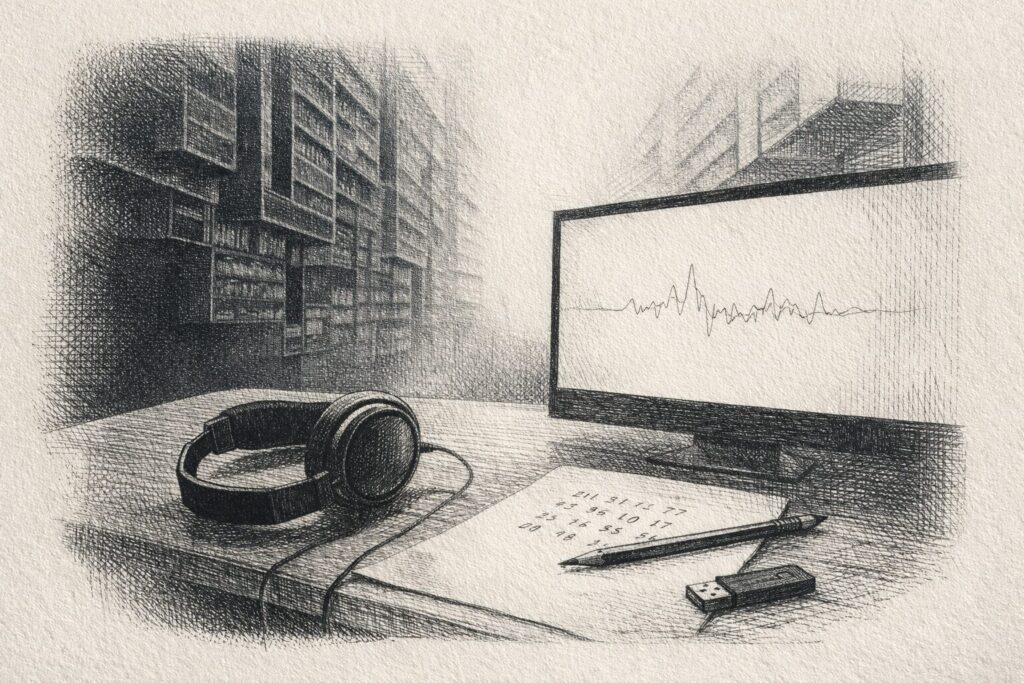
A tone filled my ears, clean and thin. Then a voice—female, flat, almost bored—began reading numbers in Spanish, separated by pauses that were too even to be natural.
“Cero… nueve… cuatro… uno…”
No music. No greeting. No station name. Just numbers, steady as footsteps.
I pulled off one headphone cup so I could still hear the room. The fan. The distant group. Lucía’s breath.
“This is a prank,” she said, like she wanted me to prove her wrong.
I listened longer. The voice didn’t stumble, didn’t react to itself, didn’t sound like it cared whether anyone understood. At exactly the same interval, a new block of numbers began. After three blocks, a different sound arrived: short, sharp beeps—like a key trying to speak through a locked door.
A small chill worked its way up my arms.
“It’s a numbers station,” I said, and the words tasted strange in my mouth in this bright place. “Shortwave broadcast. Usually one-way. Usually anonymous.”
Lucía’s brows lifted, not because she believed me, but because she’d heard the phrase before and hated that it fit.
“You’re telling me this is… spying?”
“I’m telling you it can be,” I said. “Or someone wants it to look like that.”
Lucía didn’t like stories that made her feel small
She leaned forward, palms flat, like she was bracing for an argument.
“This is Mexico City,” she said. “This library is full of students and tourists and people hiding from rain. You’re saying a spy broadcast wandered in here and… what, sat politely in the archive?”
I glanced at the computer again. The file name was a random string, like someone had spilled keys. No metadata. Someone had scrubbed it.
“Where did it come from?” I asked.
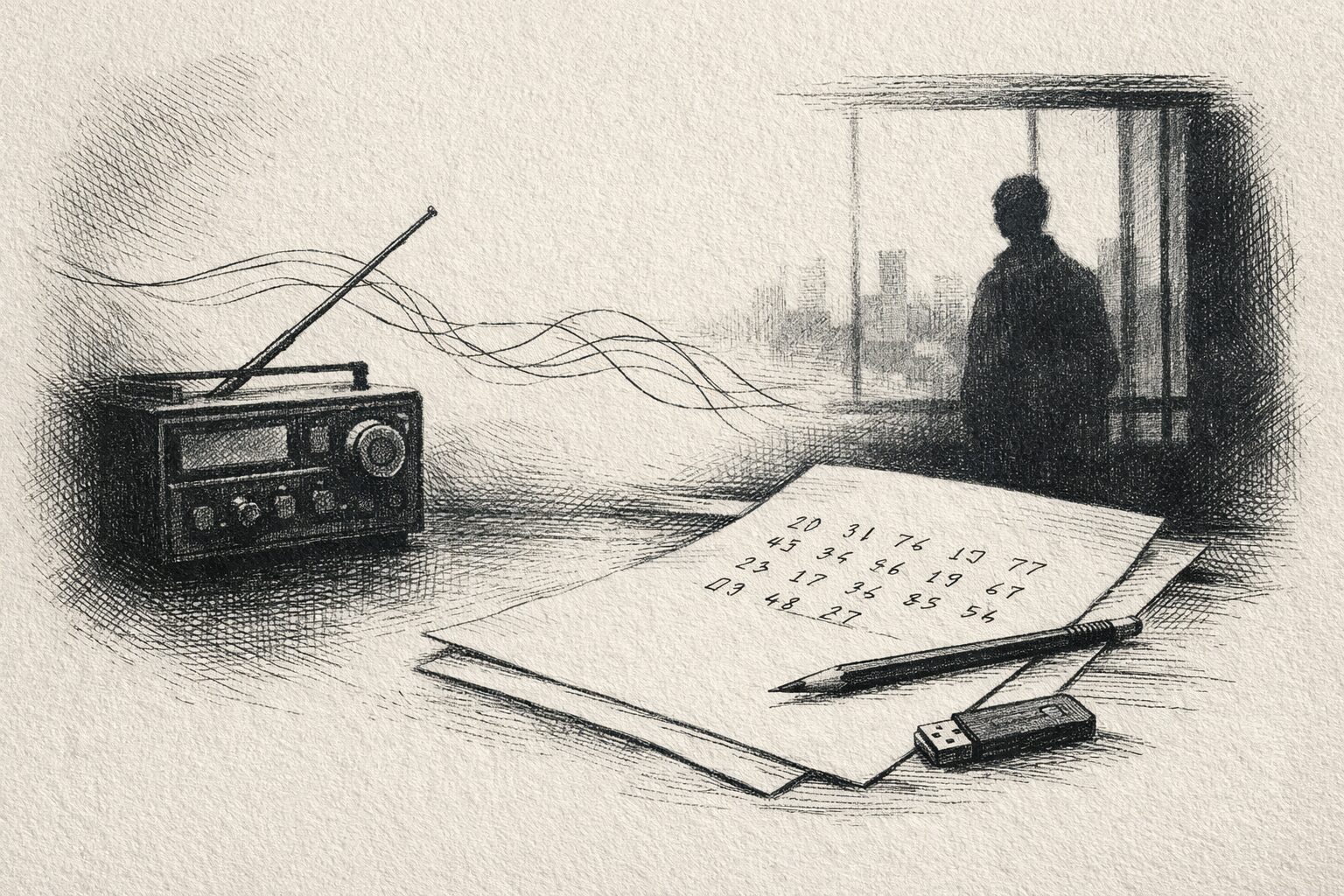
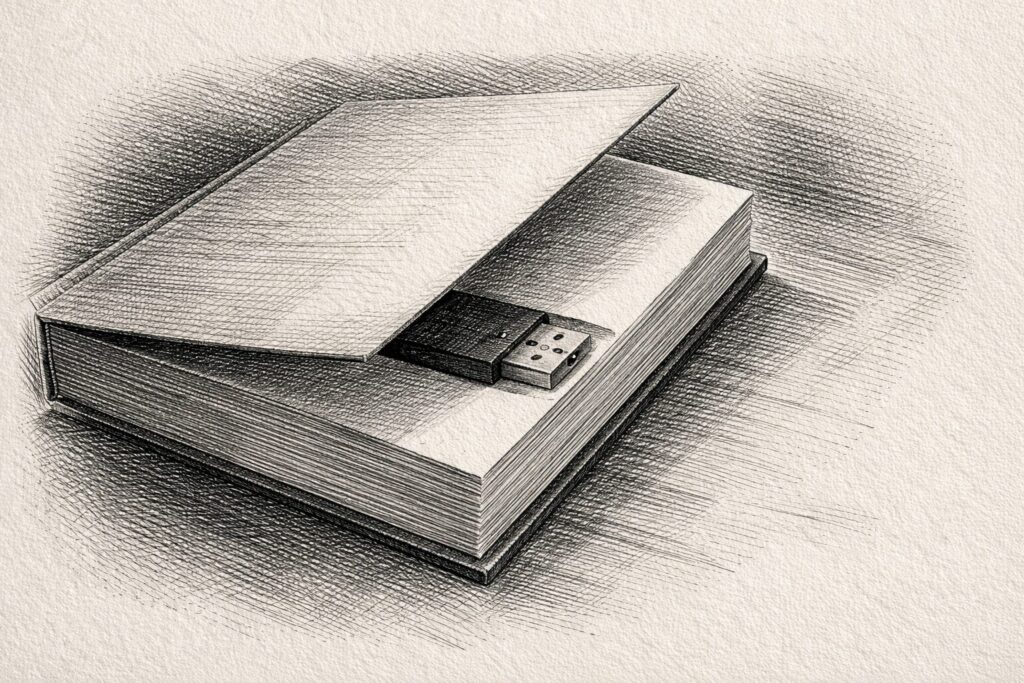
Lucía hesitated. Her fingers returned to the paper slip, folding, unfolding. “A flash drive was found in a returned book. It was inside the back cover. Like a pressed flower, except… not.”
“That book was checked out by—”
“I can’t tell you that,” she said quickly, and then softer: “I shouldn’t even have told you about the drive. But someone is already pushing.”
Outside, the school group burst into laughter, then snapped quiet again. The library’s strict calm tried to swallow everything, even fear.
Lucía said, “This morning, a man came to the desk with a smile like he’d practiced it. He said he was from a communications office. He asked for ‘the audio that’s making trouble.’ He didn’t show a badge. He didn’t need to. People moved anyway.”
She looked at me. “So if you’re going to play detective, do it fast.”
The numbers station didn’t want applause, it wanted patience
I put the headphones back on and listened like it mattered. The voice wasn’t live. There were tiny repeating artifacts, like a copy of a copy. Whoever recorded it had captured interference too—soft waves of static that rose and fell in a pattern.
That pattern was the point.
Shortwave signals travel in ways that don’t behave like your phone. They bounce off the ionosphere, curve around the planet, and arrive from angles that make direction-finding hard unless you have multiple receivers and time. A person with a basic radio can listen without leaving a trace. A person with money can hide the origin.
But the most important part wasn’t the radio magic. It was the dull voice reading numbers like it was grocery lists.
Lucía watched me listening, then said, “Okay. Explain the ‘how.’ Because right now it sounds like a ghost reading a calendar.”
I didn’t want to turn into a lecturer. So I chose the only thing she would respect: a challenge.
“Give me a pencil,” I said. “And a blank paper.”
She hesitated, then pulled a pencil from behind her ear—like she’d been waiting to be useful.
I drew a line of numbers from the recording: 09 41 36 12 77… just a sample. I circled the groups.
“These broadcasts often send groups of numbers,” I said. “Five digits, four digits, sometimes paired. The listener—whoever they are—already has the key. Usually a one-time pad. A sheet of random numbers only they possess. You combine what you hear with what you have, and the message appears.”
Lucía’s face tightened. “So anyone can decode it.”
“No,” I said quickly. “That’s the common mistake. People hear a numbers station and think it’s a puzzle for the public. It’s not. Without the pad, it’s just noise with confidence.”
She stared at the paper, then at the waveform. “So why is this here?”
“That’s the better question,” I said. “Because a real one-time pad should never be in a library book.”
Her fingers stopped folding the paper slip. “Unless someone wanted it to be found.”
A stranger arrived exactly when the room began to feel safe
A knock interrupted us—two quick taps, then one slower. Not the knock of someone who wasn’t sure they belonged.
Lucía stood up too fast. Her chair squeaked loud in the quiet.
She opened the door only halfway. A man in a plain dark jacket spoke softly, smiling without showing teeth. He held a folder like a shield.
“Buenas tardes,” he said. “I’m looking for the librarian in charge of special media.”
Lucía’s posture changed. Not fear—something more professional. The way you stand when you realize the room is no longer yours.
“That’s not me,” she said.
The man’s gaze slid past her, into the room, and landed on me like a fingertip.
“I’m sorry to intrude,” he said in English, smooth as polished stone. “We received a report of unauthorized audio material circulating here.”
Lucía’s hand stayed on the door edge, knuckles white. “There is no circulation of special media.”
The man nodded, like he was listening to a child explain weather. “I need to secure the file. It concerns public safety.”
I could have stayed silent. Let Lucía handle it. Let the library swallow the moment.
But courage isn’t always loud. Sometimes it’s deciding not to be invisible.
I stood, slowly, and took off the headphones. “What office are you with?” I asked.
His smile held. “Federal Telecommunications.”
“And your ID?”
For the first time, his eyes sharpened. “Are you staff?”
“No,” I said. “But I’m listening.”
Lucía inhaled like she wanted to stop me, but didn’t.
The man reached into the folder, not for a card but for a paper with a stamp that could have been anything. He held it up for half a second—too fast to read.
“Now,” he said softly, “we don’t have to make this unpleasant.”
Lucía said, “This is a library.”
He looked at her like she’d said, This is a dream.
In that thin space, the voice from the numbers station felt closer, like it had been waiting for a witness.
When you can’t run, you change the shape of the room
I didn’t argue with him. That would have made him the center.
Instead, I turned to Lucía and said, “Can we move to the public floor? Where there are people.”
It was a simple request. But it shifted the balance. The man couldn’t refuse without showing he had power. And if he did show it, it would be seen.
Lucía’s eyes flicked to the hallway, where a staff member pushed a cart of books with soft wheels. The library smelled faintly of cleaning solution and warm paper, like the building was constantly washing its hands.
“We can,” she said, and she slid the computer tower’s side panel closed with a click that sounded final.
The man’s smile tightened. “The file stays.”
Lucía put the flash drive—in a plain envelope—into her pocket, not his. Her voice stayed calm. “If you have a formal request, you can submit it through our director. With proper documentation.”
He took a step forward. Not a threat. A claim.
I noticed his shoes: clean soles, no dust from the street. He hadn’t wandered in. He’d come straight here, like the library was a stop on a route.
A staff member appeared at the far end of the corridor: a tall woman in a gray cardigan, hair pulled back tight, pushing a cart. She glanced up. Her eyes landed on us. Then on him.
She didn’t ask questions. She just turned the cart slightly, blocking the corridor like it was accidental.
Lucía exhaled. The library had its own quiet guardians.
The man looked around, measuring the watchers that didn’t look like watchers. He adjusted his folder.
“I’ll return,” he said, still polite. “Please don’t make this harder.”
He left the way he came, as if the building owed him a path.
Lucía leaned her forehead against the doorframe for half a second, then straightened.
“We have maybe an hour,” she said. “Before he comes back with something that looks real.”