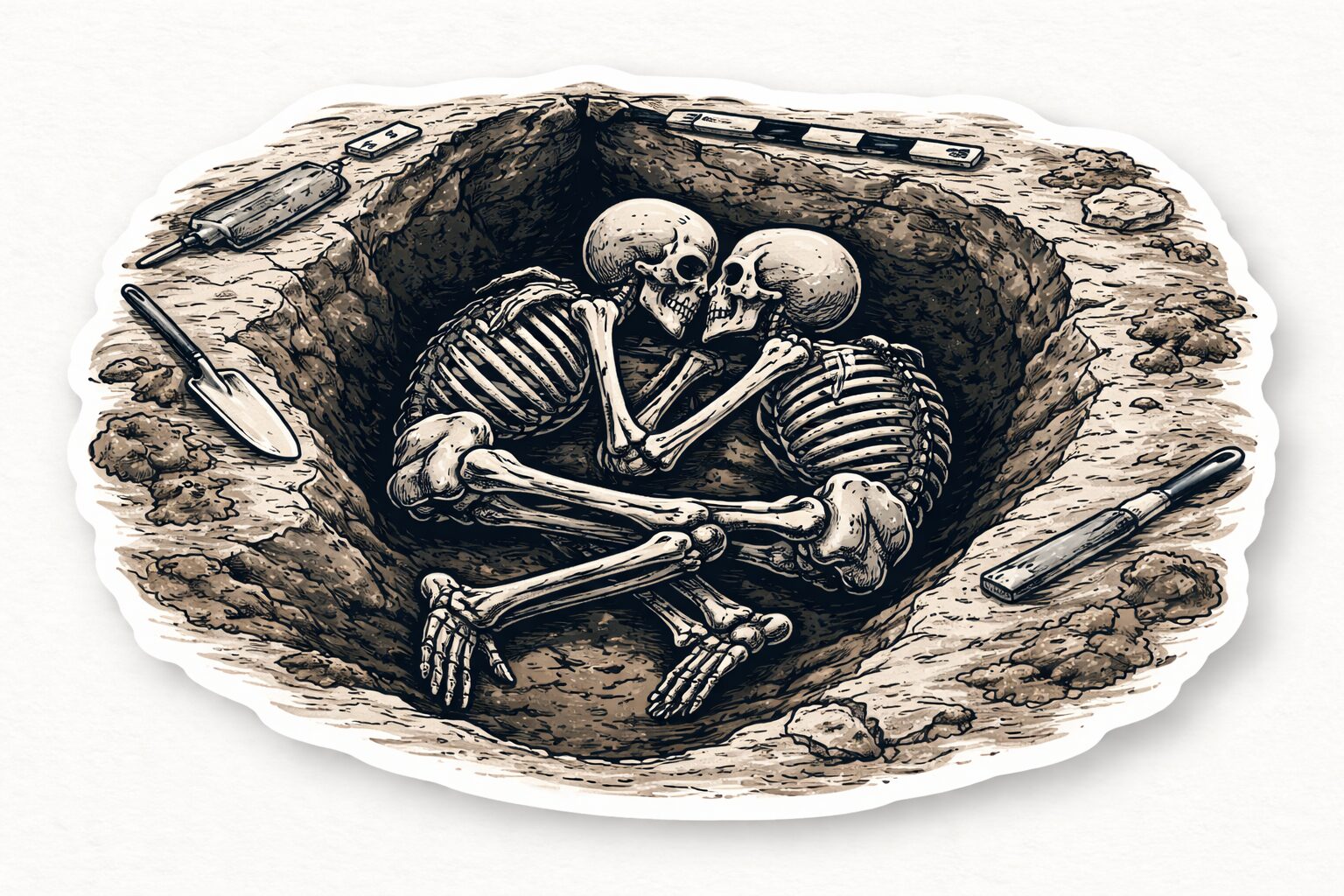
The children went quiet. Mina did too. The exchange lasted less than a minute, yet it shifted something in her. She had come expecting a famous image and a neat emotional hook for an article. Instead the lovers of valdaro kept resisting every fast sentence she tried to frame around them.
After the group left, Mina said, “You enjoy ruining people’s theories.”
“I enjoy slowing them down.”
“Same thing.”
“No,” Luca said. “Ruining is easier.”
Lunch under the wet stones
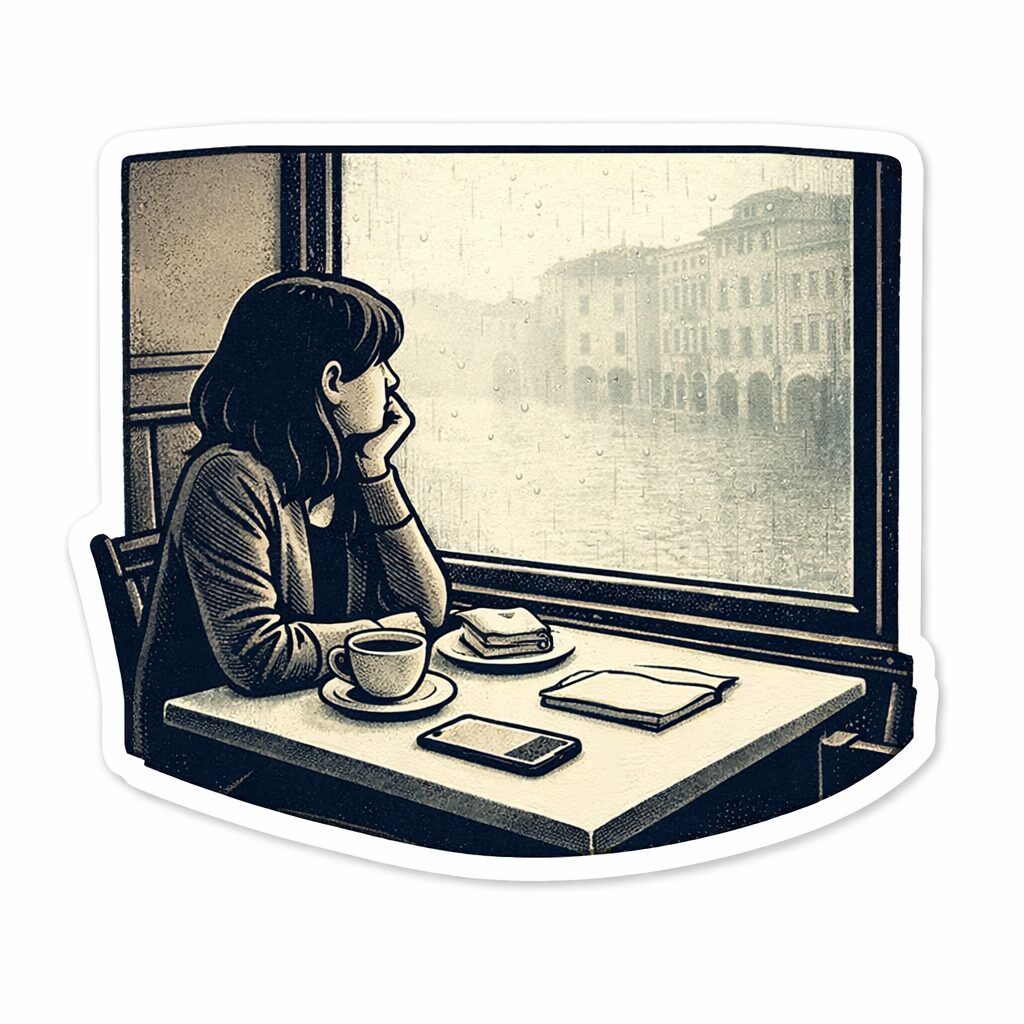
At noon, Mina left the museum and crossed the square to a narrow café with a fogged window and metal tables that rocked slightly on the uneven floor. Mantua at midday still looked rinsed by the morning rain. She ordered coffee and a small sandwich she barely touched.
Her phone remained silent.
The last messages from Daniel sat in the thread like evidence in a file. She had written first after finding the notebook again while packing away winter clothes. You wrote Go to Mantua. Was that for the article or for me? No reply. Four days later she had sent another. I’m going. Still nothing.
They had lived together for three years in Milan. They had never had the kind of break people told stories about. No infidelity discovered in a glowing screen. No broken plates. No night of shouting loud enough for neighbors to remember. They had simply spent too long postponing decisions that would have made their life actual. Daniel wanted something that could not remain permanently provisional. Mina kept saying later to things that eventually required yes or no.
She drank the coffee while looking at the square and thinking of how quickly she had wanted the lovers of valdaro to settle into a useful shape.
Lovers. Tragedy. Proof. She hated recognizing herself in the visitors Luca corrected. It made her feel ordinary in the least flattering way.
When she returned to the museum, she found Luca near the entrance desk and asked, more directly than she had planned, “Can I see the excavation material?”
He looked at her for a long second. “Why?”
“Because the case is too clean.”
That seemed to interest him. “Come back at two.”
lovers of valdaro in a cardboard archive
At two, Luca led her into a side office that smelled faintly of cardboard, dust, and climate control. Two archive boxes waited on a table. He set them down with the restraint of a man trying not to let access look like generosity.
“These are copies,” he said. “Field notes, photographs, internal summaries. You read here. No coffee. No bending corners. No romantic journalism.”
“Is there another kind?”
“There should be.”
She sat. The first folder contained site notes from the excavation near Valdaro, just outside Mantua. Coordinates. Soil descriptions. Measurements. A patient language that clearly distrusted enthusiasm. The dryness of it moved her more than she expected. These were the first people who had seen the lovers of valdaro after six thousand years, and still they had written as if breath control mattered.
“Discovered in 2007,” she said, tracing a date with her eyes.
“Yes.”
“Near other burials.”
“Yes.”
“So not some isolated miracle.”
“No burial ever is,” Luca said.
She turned a page. “Young adults.”
“That was the assessment.”
“No cause of death.”
He was sorting forms at the next desk. “You sound disappointed.”
“I sound curious.”
“Curiosity often puts on disappointment because it thinks that looks smarter.”
She ignored him and kept reading. There were photographs of the burial in the soil before removal. In those images, the pair seemed less iconic and more fragile. Earth held the contours of their closeness. The surrounding cut had not yet been cleaned for display. What moved Mina most was the fact that they still looked vulnerable to hands.
Then she reached the page describing the lift.
“They removed the whole burial together.”
Luca looked up. “Yes.”
“That must have been difficult.”
“It was.”
She heard, beneath the calm answer, the pressure of that word.
The word nobody liked
He came over and stood beside her, careful not to crowd the table. In the margin of one document, a note in another hand argued for easier separation before study. On the facing page, a later note insisted the arrangement itself had to be preserved.
“So people disagreed,” Mina said.
“Of course.”
“About what mattered more.”
“Convenience against context,” Luca said. “It’s a common fight.”
The photograph sequence showed the soil cut around the burial, supports worked beneath it, the entire block lifted intact. Mina imagined the fear of that moment. If the weight shifted wrong, if a fracture ran through the wrong place, then the lovers of valdaro might have survived six thousand years only to lose their shape in a modern room.
“Who won?” she asked.
“You saw them upstairs.”
She kept looking at the photographs. “Why preserve the whole thing?”
“Because once you separate two bodies, you can never again study the fact that they were not separate.”