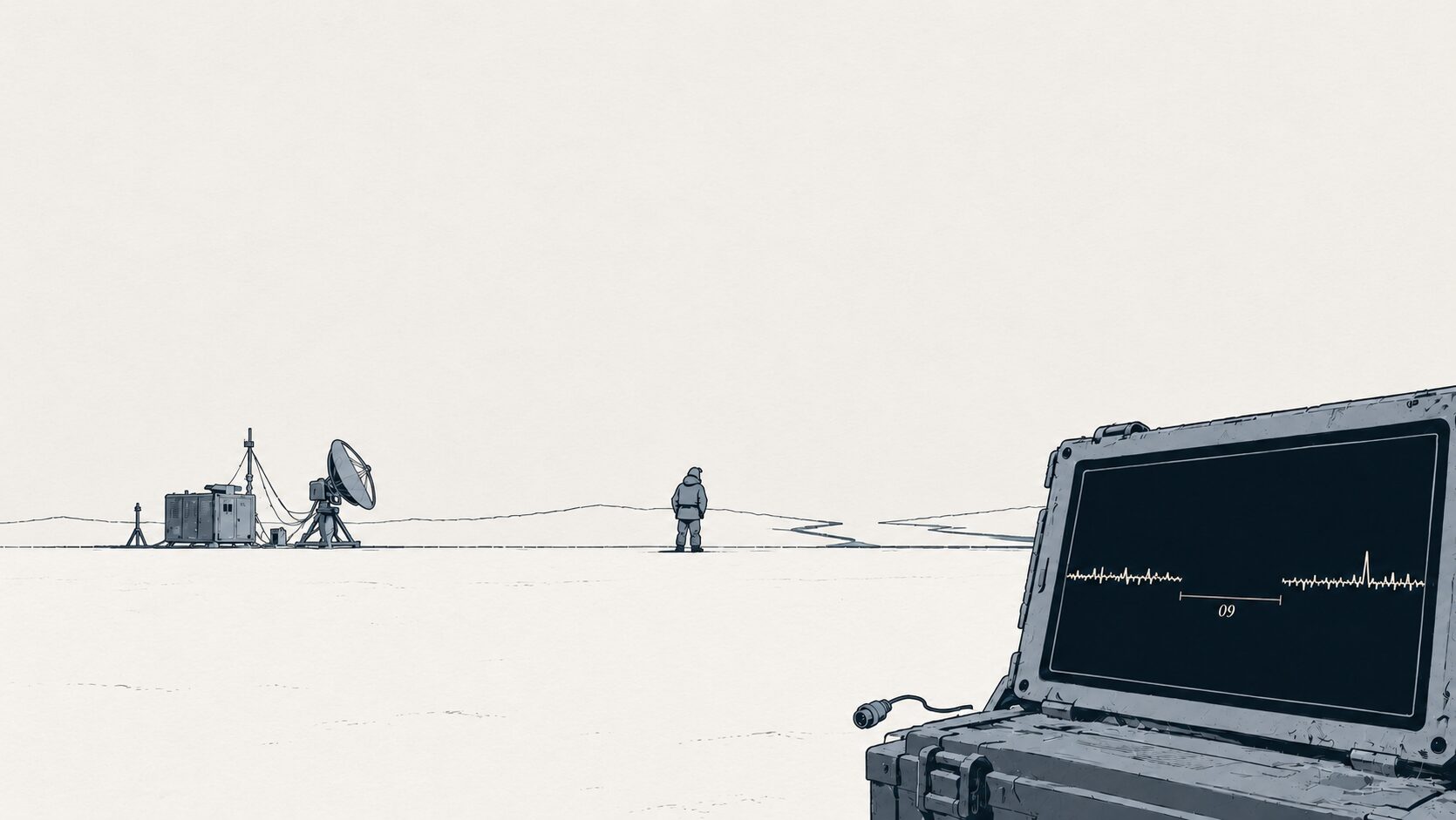
Marcus Bell got off the last flight into Cambridge Bay before the weather closed the airport, and the cold hit him before he was even all the way down the stairs. It was the kind of cold that got into your teeth. Even inside the terminal, the wind found a gap somewhere in the walls and made a low, steady sound, like something breathing. He was carrying one bag and a folder of alignment notes for the quantum radar system he’d spent the last eleven months building, and he’d expected someone to be waiting with an update on the equipment.
What he got instead was Priya Nandakumar, who’d flown in two days earlier and looked like she hadn’t slept properly since.
“They already moved everything out to the range,” she said. “Renata wanted it set up before the Colonel lands Thursday. She figured you could walk her techs through the alignment specs over the radio.”
“I built the alignment specs. I’m not walking anyone through them over a radio.”
“I told her that too.”
She didn’t say much else on the drive out, and Marcus noticed it — not tiredness, but something she was holding onto until she had a better moment to say it.
Ice Runway, Late Arrival
The truck had a crack running the width of the windshield. They drove past the Canadian High Arctic Research Station on the way to the range, its long copper roof catching what little sun there was.
Marcus had toured the station once before, as a grad student, back when the whole quantum radar idea was still just a paragraph in someone’s funding proposal. Now the company’s logo was stencilled on the shipping crates, and a forty-million-dollar contract was riding on whether the thing worked in front of a colonel who’d flown up from Ottawa expecting not to be impressed.
Back in Waterloo, his one PhD student, a woman named Dana, was still waiting on a stipend the company had frozen until this contract closed.
“How bad’s the alignment,” Marcus asked, once they reached the hut.
“See for yourself.”
He did, and it wasn’t good. Someone had taken the interferometer housing apart and put it back together without really understanding what they were touching — the bolts were torqued fine, but nothing lined up the way it needed to. Worse than that, the cryostat was running four degrees above spec. To most people, four degrees wouldn’t sound like much. To Marcus, it meant the system currently had nothing real to say. Every number it produced right now would just be noise wearing a disguise.
The Machine They Call Quantum Radar
Inside the heated hut, the machine everyone kept calling quantum radar didn’t look like much. Marcus thought it looked more like an oversized photocopier someone had bolted to a workbench and painted grey.
He didn’t try to explain the whole thing at once. Instead, when Aaron Petrov — the company’s head of business development, who also managed the outside contractors that had built the display and integration pipeline, and who had flown up with the crates and hated every second of the Arctic — wandered in and asked what it actually did, Marcus picked up a small mirror off the bench and held it next to the transmitter dish.
“You know how, if you shine a flashlight at a mirror across a dark room, you can tell it’s your light coming back, because nothing else in the room is producing light like that?”
“Sure.”
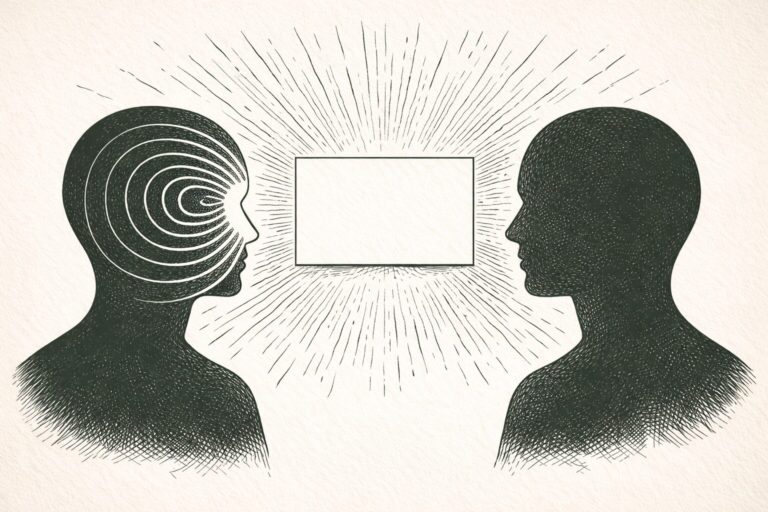
“This does something like that, except it doesn’t need the room to be dark. It splits a pulse of light into two photons that are linked to each other — not sending signals back and forth, just linked, the way two halves of a torn photograph still fit together no matter how far apart you carry them. One half stays here, safe, in a cold box. The other half goes out toward whatever we’re trying to see. When a little bit of light comes back, most of it is just noise — reflections, scatter, junk. But I can hold what came back up against the half I kept, and the pieces that actually match are the ones that are mine. Everything else, I don’t need.”
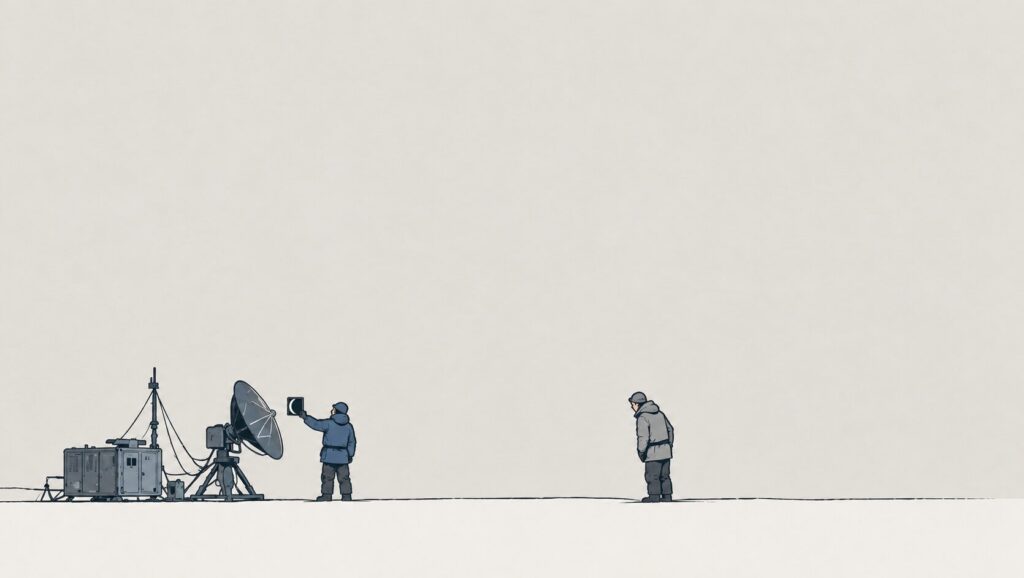
“So it’s a filter.”
“It’s recognition. A normal radar system just yells as loud as it can and listens for an echo. That works fine until you’re looking for something built to keep its echo quiet — a shape that scatters the signal sideways instead of bouncing it back, a coating that eats it. Against loud, quiet wins. It doesn’t win against something that can pick its own reflection out of a room full of strangers.”
Petrov nodded slowly, in the way of someone who understood about sixty percent of it and had decided that was enough.
Marcus didn’t push it further. What he didn’t say out loud — because it hadn’t crossed his mind yet as something worth worrying about — was that recognition only worked if you actually checked. Nothing stopped someone from just writing “match” on the screen and skipping the checking part entirely.