What Fourteen Months of Dream Recording Can Hold
The data access came six weeks after the claim was filed, as part of a preliminary disclosure agreement while the broader settlement was negotiated. It arrived as a report — not the raw neural data, which required specialized software to interpret, but a processed summary prepared by a neutral technical analyst appointed by both sides. The analyst was a woman at the University of Glasgow who had published extensively on the ethics of neural data and who prepared the summary with the care of someone who understood she was handling something that belonged to a specific person.
Nora read it alone, at her kitchen table, on a Tuesday morning in April. The Edinburgh light was doing what Edinburgh light does in April — arriving with a kind of tentative optimism, not yet committed to warmth but no longer refusing it.
The summary described the dominant emotional patterns in her mother’s recorded sleep data across fourteen months. It was written in clinical language that Nora had to read slowly, parsing the technical terms with the patience of someone determined to understand precisely and not approximately.
What it described was not dramatic. It was not the revelation she had half-prepared for, the clear evidence of something hidden or terrible. It was quieter than that, and in its quietness, more difficult.
Her mother’s most persistent emotional signature during sleep, across fourteen months, was something the analyst described as anticipatory ambivalence — a pattern associated with a person in the process of making a decision they were not yet ready to make. Present in over sixty percent of recorded sessions. Consistent in its architecture, variable in its intensity. The signature, the analyst noted, of someone who was holding two incompatible things and had not yet found the way through them.
There was no fear in the data. No grief. Nothing that suggested trauma or concealment. Just the long, patient weight of a person working something out in the only place they had left entirely to themselves.
Nora read this paragraph three times.
She thought about the last two years before her mother’s death. The slight distance that had developed between them. The phone calls that were warm but shorter than they used to be. The visit at Christmas where her mother had seemed, several times, on the edge of saying something and had pulled back. Nora had attributed all of this to the ordinary drift of adult life — the increasing separateness of people who love each other but inhabit different dailiness.
The data suggested something more specific. Her mother had been in the middle of something. A decision with weight. A question she was living inside without resolution.
What the decision was, the data could not say. The dream recording captured the feeling, not the content. The analyst was clear about this — clear in a way that told Nora she had thought carefully about where the line was between what the data showed and what it meant.
Her mother had been working something out. She had been doing it privately, in the only truly private place she had. And someone had been recording it.
The Settlement and What Came With It
The settlement took four more months. Saoirse negotiated a package that included compensation for affected participants, a mandatory notification process for everyone whose data had been collected through the wellness platform, and a requirement that Ariel Systems suspend use of the contested training data pending individual consent reviews. It was not everything Saoirse had pushed for — it rarely was — but it was, she told Nora, more than most cases of this type achieved.
Nora’s personal compensation she directed to a legal fund for data rights cases involving deceased individuals — people who could not consent and whose estates had no mechanism to object. She did this without announcement. It was not a gesture she needed witnessed.
The production of The Interval was eventually remounted, six months later, with a human cast. Gideon sent her the opening night program. She was not in it — she had moved on by then, to a different production, in a different city — but her name appeared in the acknowledgments page, in a sentence that was careful and accurate and said exactly as much as it needed to.
She had not asked him to include it. He had done it anyway.
The Last Private Place
In September, eight months after the story broke, Nora went back to Inverness for the first time in three years. She drove — she had borrowed a car, the same way she had once borrowed a suit for an audition — and arrived in the early evening when the light was doing what Highland light does in September, which is to behave as if it knows it is leaving and wants to be remembered.
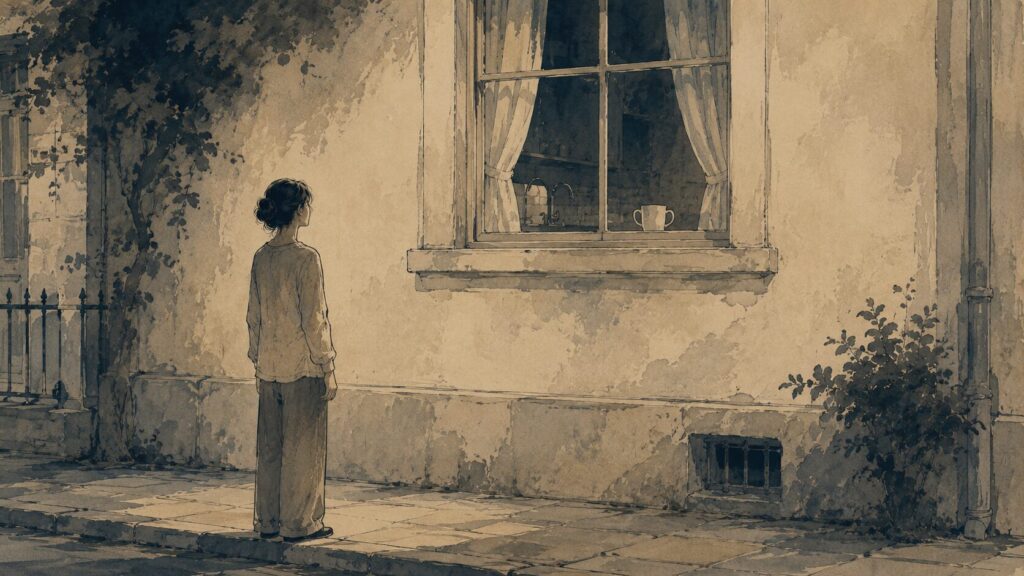
She went to the house, which had been her mother’s and was now rented to a family she had never met. She did not knock. She stood on the pavement outside and looked at the window above the sink in the kitchen — visible from the street, the curtains drawn back, a mug on the sill that belonged to someone else.
She thought about the settlement. About the thousands of people who had received notifications about data they hadn’t known was being collected, most of whom had probably read the notification with the mild discomfort people feel when reminded that something has been taken from them without their full awareness, and then returned to their days. About her mother’s dream recording data, which was now part of a negotiated archive, held under restrictions, no longer being actively used to train anything.
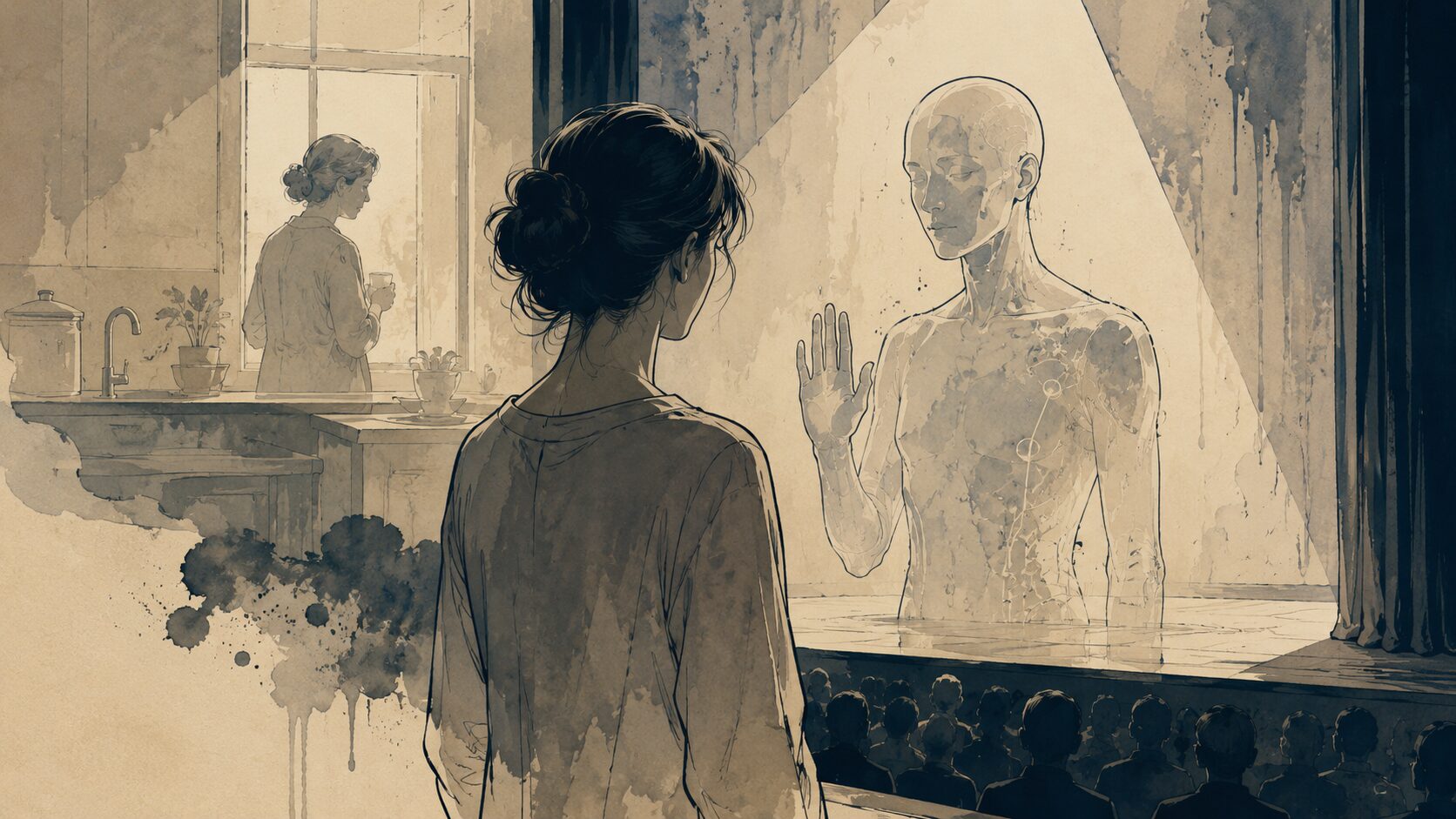
She thought about the gesture she had seen the AI perform — the hand against the glass — and the question she had never been able to fully answer: whether that gesture had come from her mother’s data, or from her own, or from the thousand other people whose sleeping minds had contributed to the system’s vocabulary of human feeling. The settlement had not produced that answer. Some things the legal process could not retrieve.
She stood outside the house for a while. A child’s bicycle leaned against the wall near the door, red and slightly too large for a child, the kind of bicycle that belongs to the aspirational version of a child rather than the current one. Ordinary life, entirely indifferent to hers.
She thought about the data summary. The anticipatory ambivalence. The sixty percent of nights. The quiet, persistent weight of someone holding two incompatible things and working through them in sleep.
Her mother had been in the middle of something. Nora had not known. She would now not know in a different way — not the not-knowing of someone who hasn’t asked, but the not-knowing of someone who has asked everything available and received the shape of an answer without its content.
This was a kind of knowledge. It was not comfortable. It was accurate.
She got back in the car. She sat for a moment without starting it. Then she took out her phone and opened her contacts and found a name she had added eight months ago and not yet called — the name from the card she had found in her mother’s desk eleven years ago, the name she had searched and eventually traced to a man now living in Inverness, who had known her mother during the last two years of her life, who had been part of whatever her mother had been working out.
She had not called because she had not been ready. She had spent eight months becoming ready, and she was not sure she was there yet, but she was closer than she had ever been.
She dialed.
It rang once. Twice. On the third ring someone answered. A man’s voice, older, careful.
She opened her mouth.
Outside, the Highland light was doing what it always does at the end of the day — going slowly, taking its time, as if it understood that the things it illuminated were worth one more moment before the dark.
Neither of them spoke first.
The line stayed open.
We’ve fabricated an artifact belongs to the dream recording that should have stayed unseen, where sleep kept a mother’s silence until a machine carried it into the light.