What the Dream Recording Consent Form Actually Said
The clause was there. It was in section 7, subsection C, in a paragraph that began with the phrase derivative research applications and ended with a reference to commercial partnerships operating under the same ethical framework as the primary research institution. It was nine lines long. It was written in the kind of language that is technically accurate and functionally invisible — the language of people who have thought carefully about what they need to say and even more carefully about how to say it so it doesn’t register.
She read it four times. She was not a lawyer. But she had spent fourteen years reading contracts for theatrical work, and she knew the difference between language that described what would happen and language that preserved the option of what might happen without committing to anything specific.
This was the second kind.
She forwarded the email to Bridget with a message that said: I need a lawyer who handles data and IP. Today if possible. Then she made coffee she didn’t drink and sat at the table and thought about the system she would be rehearsing with on Monday.
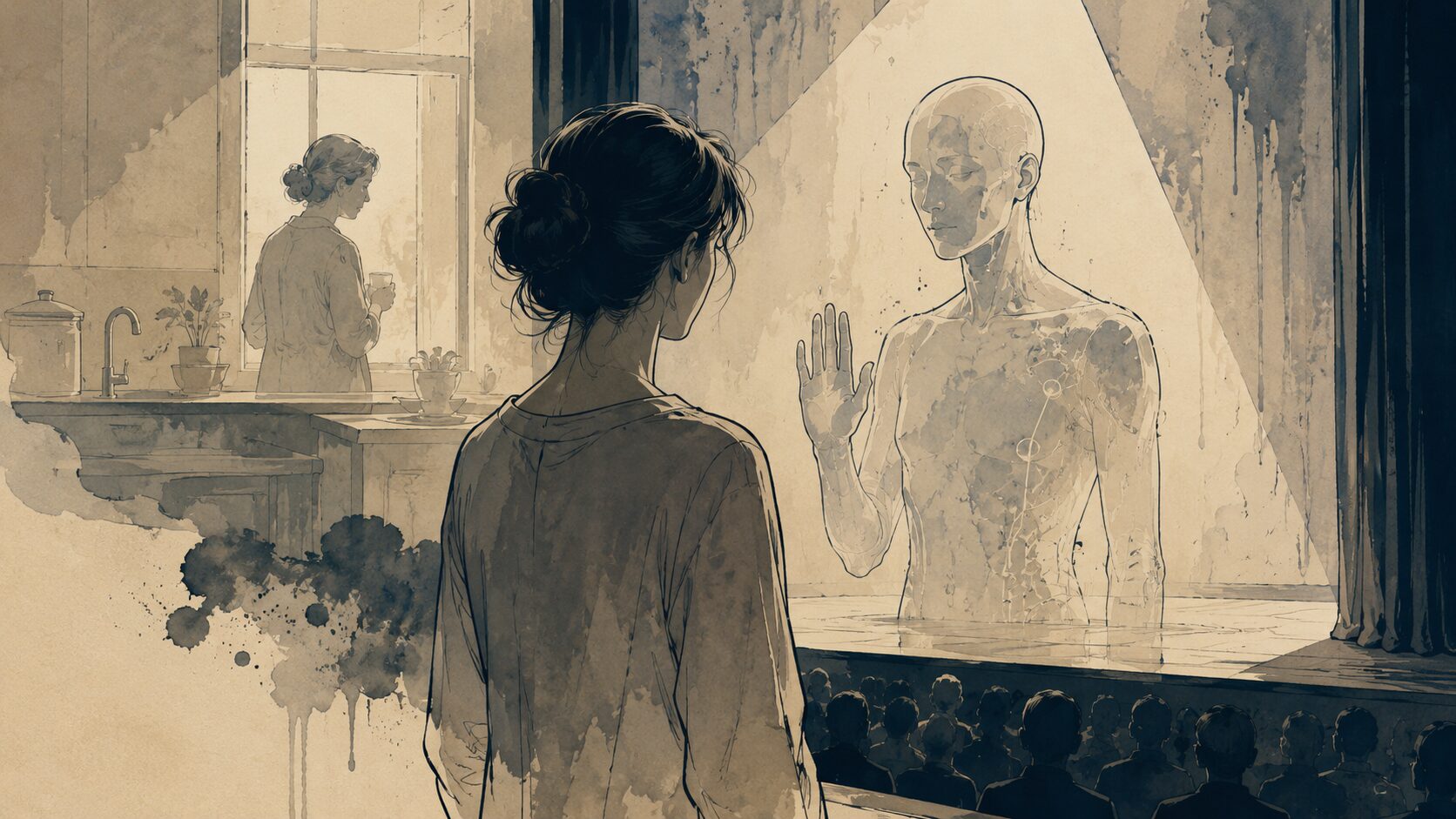
She thought about the hand against the glass. She had been trying to place it since Friday and it had come to her, finally, at two in the morning on Saturday: her kitchen, three years ago, a winter morning after a phone call she had not been prepared for. She had stood at the window in exactly that way — palm flat against the glass, not looking out but at her own reflection, in the specific posture of someone whose body has understood something before the mind has caught up.
She had been wearing her NeuroTrace band. She wore it every night. The device captured sleep data, yes — but she had also worn it in the early mornings sometimes, on days when she hadn’t taken it off immediately. On days when she was still half in the dream.
The Ariel system had not learned her gesture from a dream. It had learned it from the emotional residue of a waking moment captured at the edge of sleep.
This changed something. She was not entirely sure yet what it changed, but it was not small.
Nine Days Before Opening and What Gideon Didn’t Know
She considered telling Gideon. She ran the conversation in her head several times — sitting across the folding table from him, explaining what she had found, watching his face perform the calculation of what it would mean to lose the AI system nine days before opening. She knew what the calculation would produce. She knew because she had done it herself.
The production had a venue, a technical crew, advance press, and a director who had staked something on it. It had a set designer who had built something around the specific capabilities of the Ariel system. It had Nora herself, who had not worked a full theatrical run in fourteen months and who had told Bridget, in a moment of unguarded honesty, that this production felt like the last exit on a particular road.
Removing the Ariel system nine days before opening would not simply delay the production. It would end it.
She went to Monday’s rehearsal without telling Gideon anything. She stood on her marks and ran the scenes and performed opposite the system with the professionalism she had built over fourteen years, and she watched it move and tried to locate, in each gesture, what was hers and what was someone else’s.
There was a scene in Act Two where the AI figure sat on the floor with its back against a wall, knees drawn up, in the posture of someone who has decided to stop trying to stand. She recognized this too.
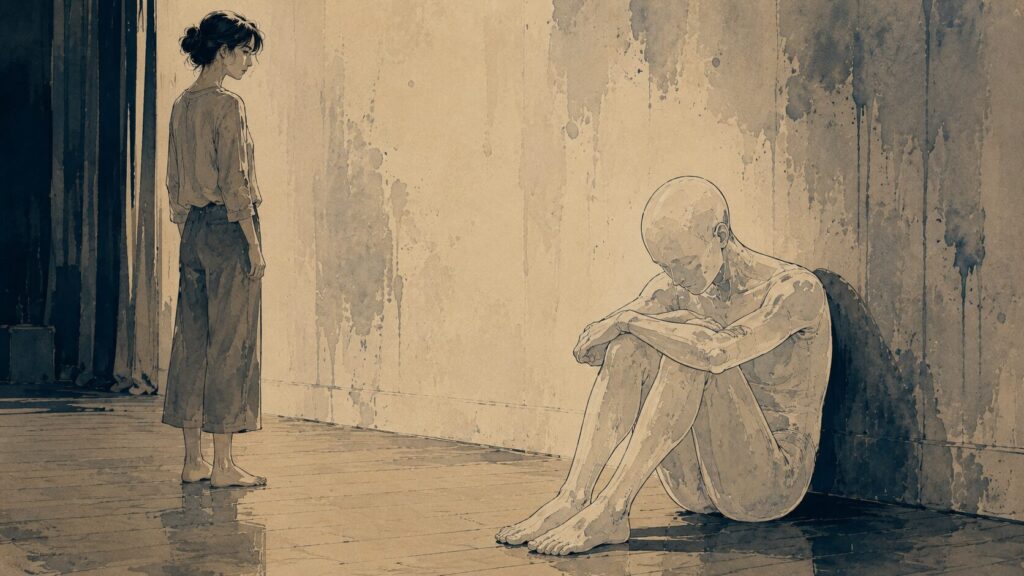
Not from her own body — from somewhere else. Someone else’s body. A posture she had seen, specifically, in a person she had loved.
After rehearsal she went to Cassie Park and said she needed to see the training data provenance for the specific sequences in Act Two.
Cassie said that wasn’t something she could share.
“Then I need you to tell me something,” Nora said. “The data that trained this system — was all of it sourced through Somnis? Or did Ariel have other collection partnerships?”
Cassie looked at her for a moment. “Why are you asking?”
“Because there’s a gesture in Act Two that didn’t come from me,” Nora said. “And I want to know who it came from.”