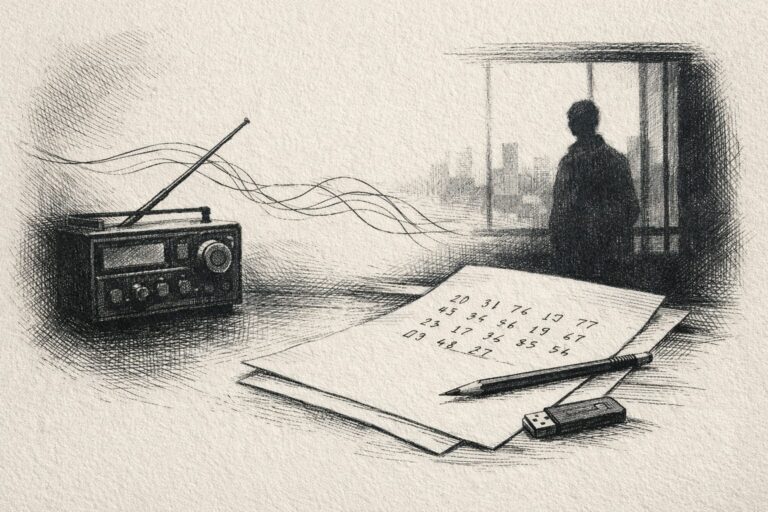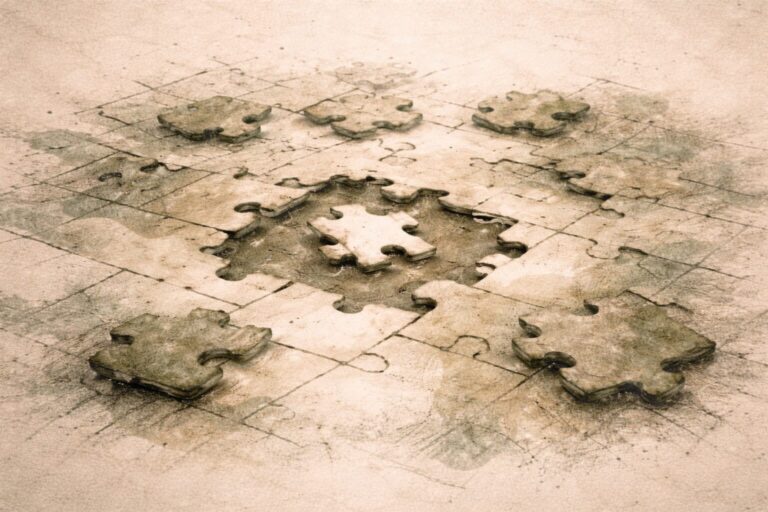
Panel B waited as if it remembered 1943.
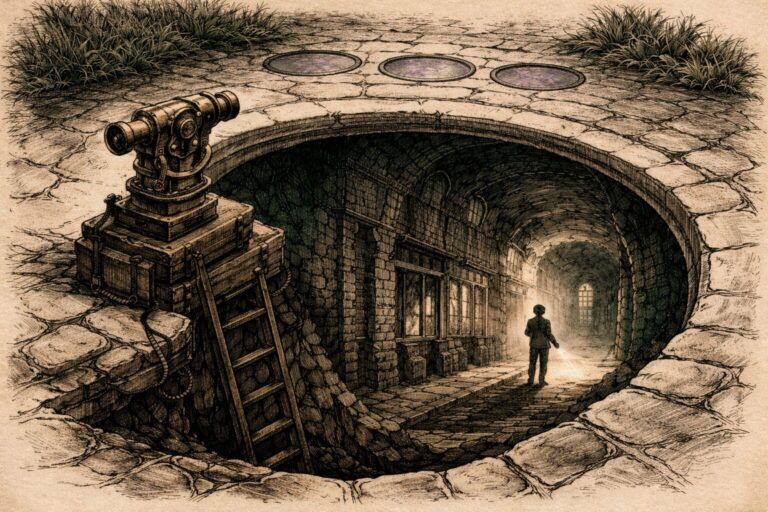
The service stairwell smelled of dust and cold metal. Down below, the old power station side carried a heavier scent—oil, iron, and the faint sweetness of damp concrete. Rui pushed the door with a reluctant groan of hinges, and the sound echoed longer than it should have.
Panel B was a plain square of metal with a small label. Rui swiped his access card. Red light. He tried again. Red.
Leo leaned in. “It’s not reading.”
Rui glared at the panel like it had betrayed him personally. “This panel doesn’t do that.”
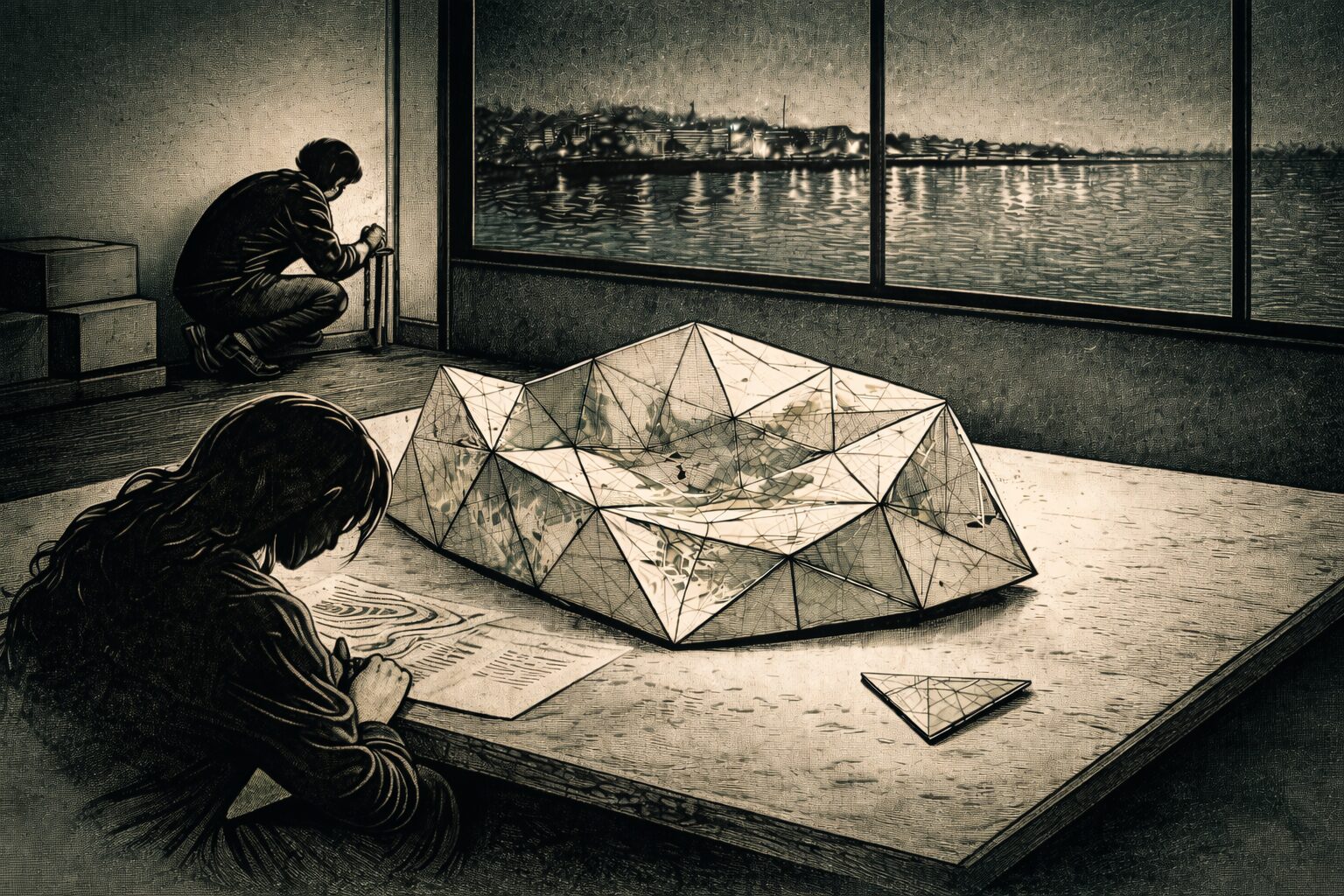
Asha held the Dymaxion Map closer. The triangles warmed slightly against her forearm. Writing shimmered along a seam:
FOLD TO LOCK.
Rui’s voice went hard. “No.”
A different voice came from the stairwell behind them, calm and too sure for this hour. “It isn’t keyed. It’s aligned.”
Asha turned.
A man stood one step above them, fingers smudged dark, as if he’d been working with carbon paper or soot. He didn’t look surprised to see them. His hands moved lightly, as if he was folding invisible paper while talking.
“Kaito,” he said, like a fact, not an introduction. “Fabrication space. The alarms changed the access routes.”
Rui’s eyes narrowed. “Fabrication is closed.”
Kaito’s gaze flicked to Rui’s keys. “So is your gate. Yet here.”
Leo’s shoulders lifted with reluctant relief. “You know what this is?”
Kaito looked at the net the way a musician looks at a strange instrument. “I know the idea. And I know that a net only behaves when the folds are correct.”
Asha felt the hum in the walls shift again, impatient.
Kaito crouched near Panel B and ran two fingers along the seam without pressing. “Someone built a cradle behind this. For a folded solid.”
Asha’s stomach tightened. “Who?”
Kaito’s eyes didn’t lift. “Someone who liked triangles.”
Rui muttered, “That’s everybody’s problem tonight.”
Asha swallowed and set the map on the floor.
The Dymaxion Map clicked into a solid and opened the lock.
Kaito didn’t take over. He waited a beat for Asha’s permission, then guided with small motions. Together they folded the net into a compact icosahedron—twenty triangle faces meeting into a sharp-edged globe. It didn’t look like Earth. It looked like a decision.
When the last seam clicked, Panel B released with a soft sound that felt relieved.
Rui froze. “How did—”
Leo’s badge beeped again. The triangle icon turned green.
Inside the open panel was a recessed cradle shaped exactly for the folded globe.
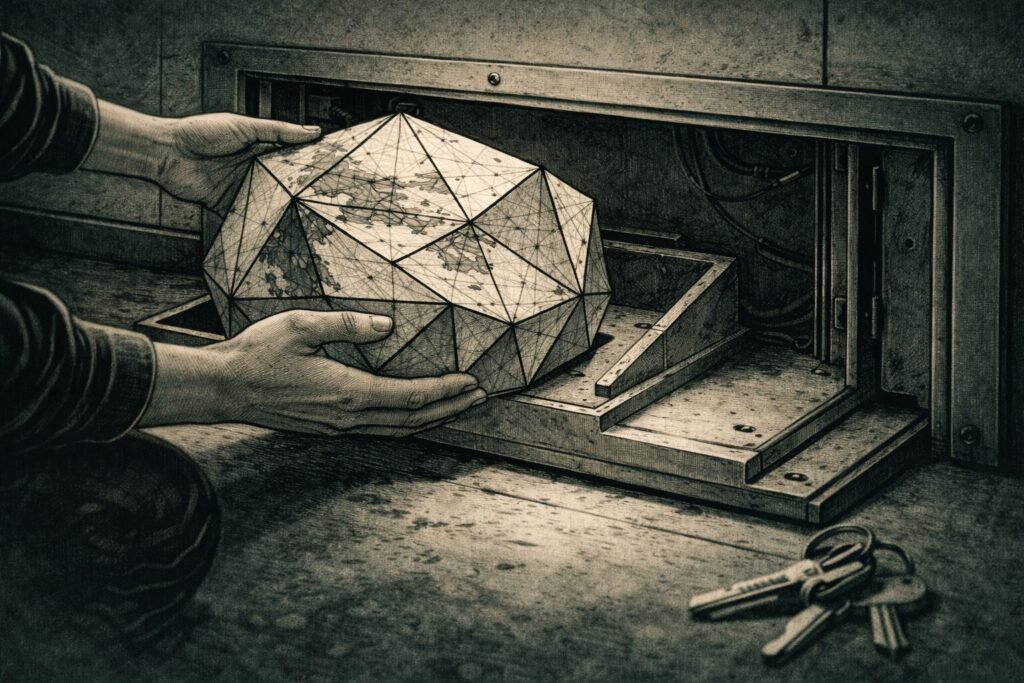
Asha lifted the icosahedron and set it into place. It fit as if it had been expected for years.
The hum from the old machinery dropped away entirely.
The sudden quiet made Asha’s ears ring.
A voice came from inside the panel—thin, measured, not quite human.
“Orientation required.”
Leo went pale. “That’s not a museum system.”
Rui stepped back as if the air had turned solid. “No.”
Asha leaned closer, keeping her voice steady. “Orientation of what?”
“Center required,” the voice replied.
Leo whispered, “It’s asking how to unfold the net.”
Rui’s eyes hardened. “So it wants you to pick who’s in the middle.”
Asha looked at the folded globe. “Or it wants proof we won’t treat one place as default.”
Kaito’s fingers hovered, almost protective. “Fuller hated defaults.”
Rui snapped, “Fuller?”
Asha kept it simple. “Buckminster Fuller. The guy tied to this projection.”
Kaito added, “A public cut-out version appeared in 1943 in a popular magazine. People folded the world at their kitchen tables.”
Rui stared. “You’re telling me this building has a secret socket for a 1943 paper map.”
Asha stared back. “I’m telling you it does.”
The voice spoke again. “System unstable.”
Asha looked at Leo. “We need a center.”
Leo’s thumb rubbed his badge again. “The Dymaxion Map can be laid out in different ways. You can cut and unfold it with different ‘ups.’”
Rui’s keys chimed once, a small sound that made Asha want to laugh and didn’t.
Asha asked the voice, “What happens if we choose wrong?”
The voice answered, flat. “Feedback.”
The word landed like a warning and a promise.