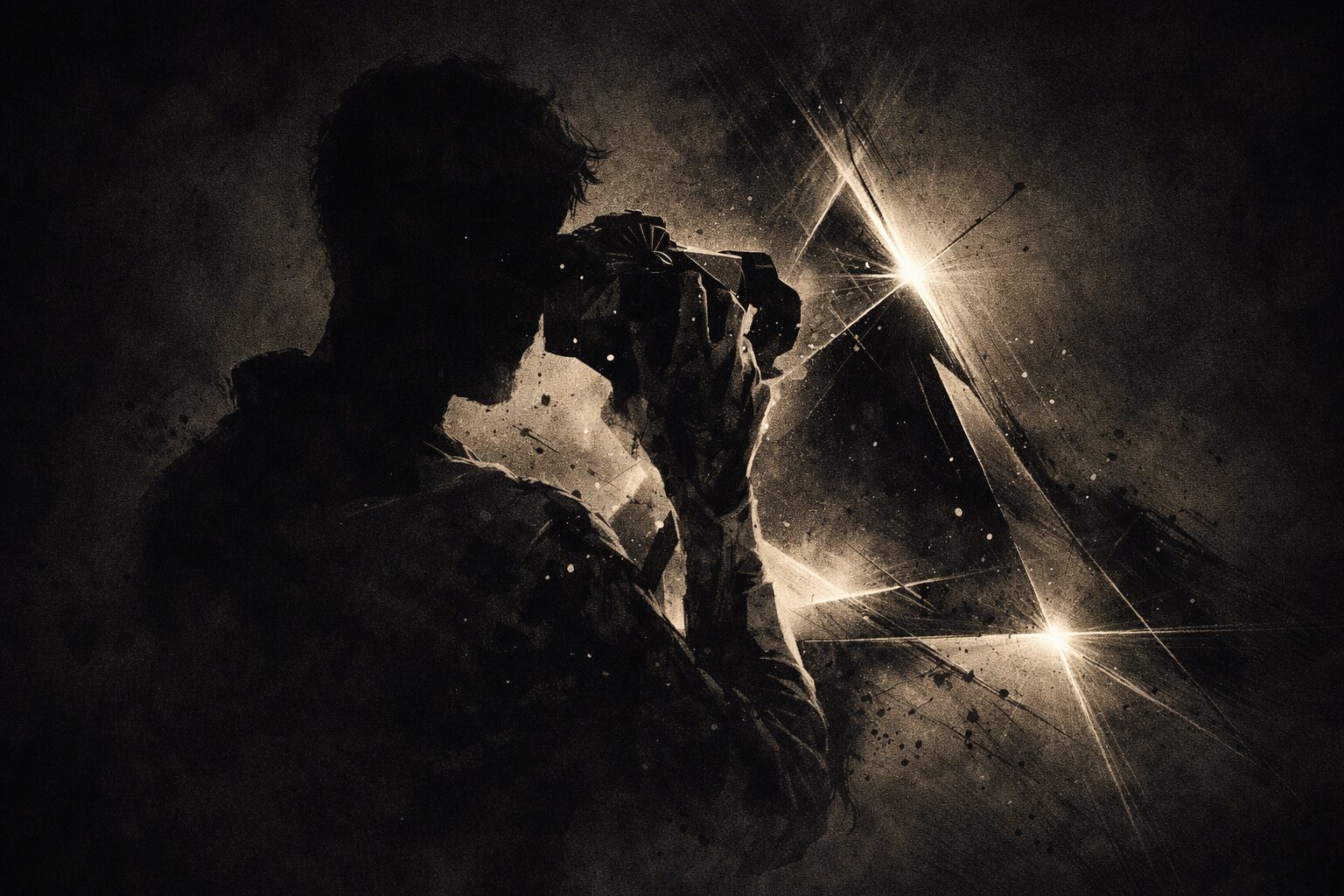
Most people first encounter the photography exposure triangle as something they’re expected to memorize. Early on, it appears as a diagram with three controls and an unspoken pressure to understand it quickly. If clarity doesn’t arrive right away, many assume photography itself might remain difficult or inaccessible.
That first impression lingers, even though it misses why the idea survived for so long.
The exposure triangle didn’t endure because it explains camera settings efficiently. Instead, it lasted because it gave photographers a way to think about choice. Long before it became a teaching diagram, it helped make sense of limitation — not as a flaw, but as a condition of the medium.
Every photograph asks for a decision.
The triangle simply made that decision visible.
Why the Photography Exposure Triangle Needed a Shape
Photography has always operated within boundaries. Light behaves differently depending on how it’s handled. Motion reacts immediately to timing. Depth never arrives without consequence. These realities existed before digital cameras and remain present despite technological advances.
Because of that, photographers needed a language for limitation that didn’t frame it as failure. The photography exposure triangle emerged to meet that need. Rather than promising control, it clarified consequence.
Once one element changes, another responds. Nothing adjusts in isolation. As a result, the triangle helped photographers stop chasing a single “correct” exposure and start evaluating priorities instead.
Over time, this shift mattered more than any technical explanation. Instead of asking what settings were right, photographers learned to ask what mattered most in the moment.
How the Photography Exposure Triangle Changed the Way Decisions Are Made
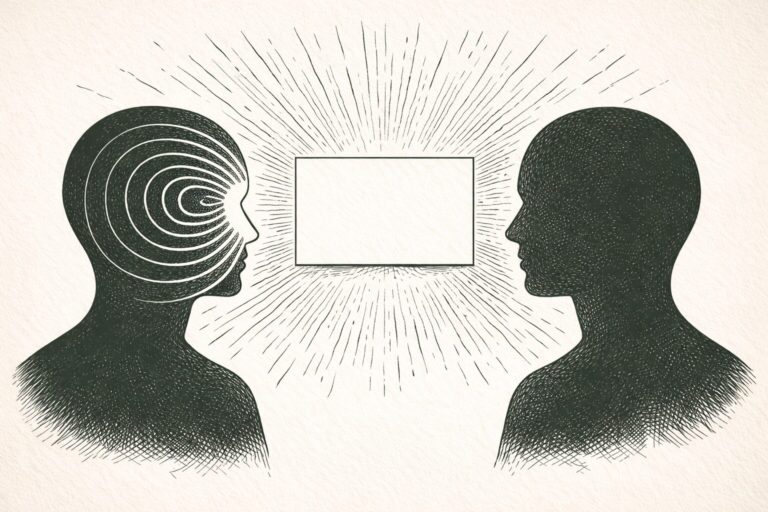
Rules demand obedience. The photography exposure triangle does something quieter and more useful. It shows what happens when a choice is made.
By mapping the relationship between exposure variables, the triangle encourages responsibility rather than compliance. When one quality gains priority, another inevitably recedes. That trade-off doesn’t signal error; it signals intention.
Because of this, photographers who understand the exposure triangle stop framing their work around correctness. Instead, they begin to think in outcomes. They consider whether clarity serves the image or flattens it, whether motion adds meaning or distracts from it.
Gradually, photography shifts from optimization to selection. The triangle becomes less about control and more about awareness.
Why Photographers Never Really Outgrow This Idea

As experience grows, photographers rely less on numbers and more on instinct. Settings fade into muscle memory. Automation handles routine decisions. At first glance, it might seem as though the exposure triangle becomes irrelevant.
However, calculation disappears while judgment remains.
Even when photographers stop consciously thinking about aperture or ISO, they still think in outcomes. They sense when an image needs restraint, when it benefits from softness, and when precision removes character. These instincts remain shaped by the same relationships the exposure triangle describes.
In this way, the triangle matures rather than dissolves. It moves from the camera into the mind, guiding decisions quietly instead of visibly.
When Technical Choices Start Shaping Personal Taste
Eventually, the exposure triangle stops feeling limited to photography. The way of thinking it encourages begins to appear elsewhere.
Photographers who grow comfortable with trade-offs often carry that mindset into how they work and move through the world. Over time, they become less interested in excess and more attentive to purpose. Instead of choosing everything available, they choose what aligns with the work at hand.
That awareness often influences process, posture, and even the objects they keep close. Not as branding or identity signaling, but as coherence. What they carry begins to reflect the same restraint they practice behind the camera.
This is where the idea became tangible for us.
Rather than treating the photography exposure triangle as something abstract, we allowed it to inform a physical piece — not as merchandise, but as an artifact. The intention wasn’t to display a concept, but to carry the same mindset of deliberate choice into something wearable.
If you’re curious, that piece lives here:
👉 Photography Exposure Triangle Idea Tee
The writing continues whether you visit it or not.
Why Modern Photography Tools Didn’t Replace the Exposure Triangle
Photography tools have changed dramatically. Cameras now handle light that once felt impossible. Software corrects errors instantly. Automation smooths complexity without effort.
Even so, these advances didn’t remove decision-making. They intensified it.
When tools make more outcomes possible, intention becomes more visible. The question no longer revolves around what the camera can do, but around what the photographer allows. As a result, the exposure triangle no longer lives primarily in dials or menus.
Instead, it lives in taste and restraint.
The triangle remains active even when it’s invisible, shaping images through judgment rather than calculation.
How the Photography Exposure Triangle Still Shapes What Comes Next
As photography continues to expand, abundance grows alongside it. Images circulate faster than ever, while new tools appear constantly. At the same time, options compete for attention from every direction, and speed quietly becomes the default state.
Under these conditions, clarity doesn’t come from capability. It comes from choice.
The photography exposure triangle quietly prepares photographers for this reality by normalizing limitation. It reinforces the idea that no image can hold everything at once, and that prioritization isn’t weakness — it’s direction.
Rather than predicting the future of photography, the triangle equips photographers to move through it without losing intention.
Not as a formula.
Not as a lesson.
But as a way of thinking that remains useful long after the diagram fades.
The exposure triangle never promised perfect photographs.
Instead, it offered something more durable.
A framework for choosing what matters — and letting the rest fall away.